Scooters & E-Mobility
Electric Scooters and Electric Bikes Are Not the Same Machine
They share a battery chemistry and almost nothing else. Wheel size, standing posture and how the power arrives make them behave completely differently.
Comparisons of scooter and e-bike differences usually pick a winner. This one picks the circumstances, which is more useful.
The difference in one place
- A standing rider cannot shift weight backwards under braking.
- Small hard wheels transmit road defects instead of rolling over them.
- Pedals give an e-bike a working machine when the battery dies.
Two different answers to the same question
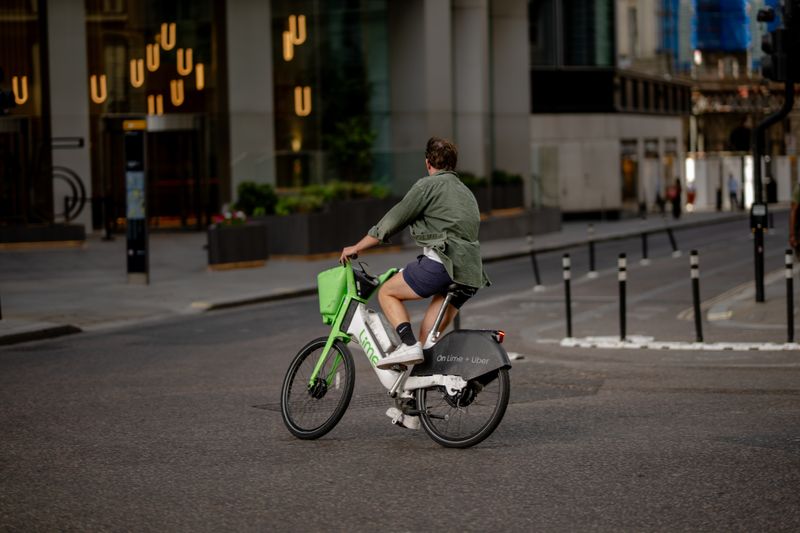
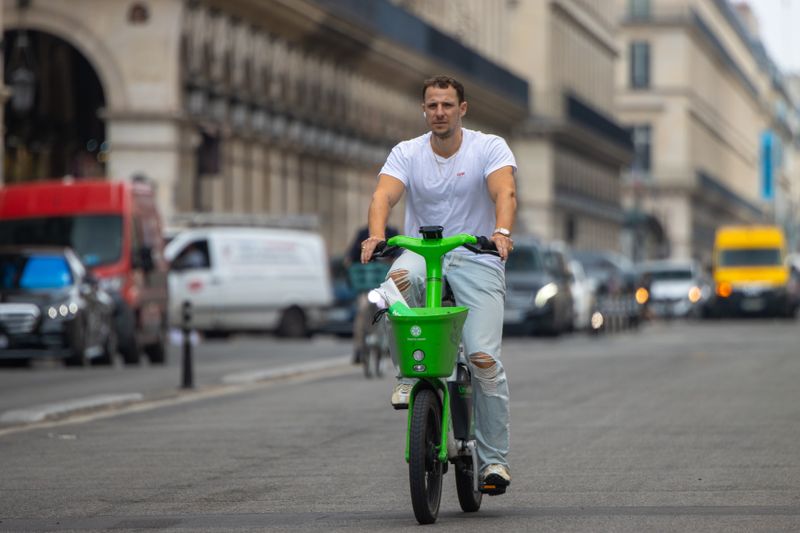
Both machines exist to cover a few kilometres of a city faster than walking without the storage and cost problems of a car. An electric bicycle achieves that by adding a motor to a vehicle that already worked, so the rider still contributes and still has gears and pedals.
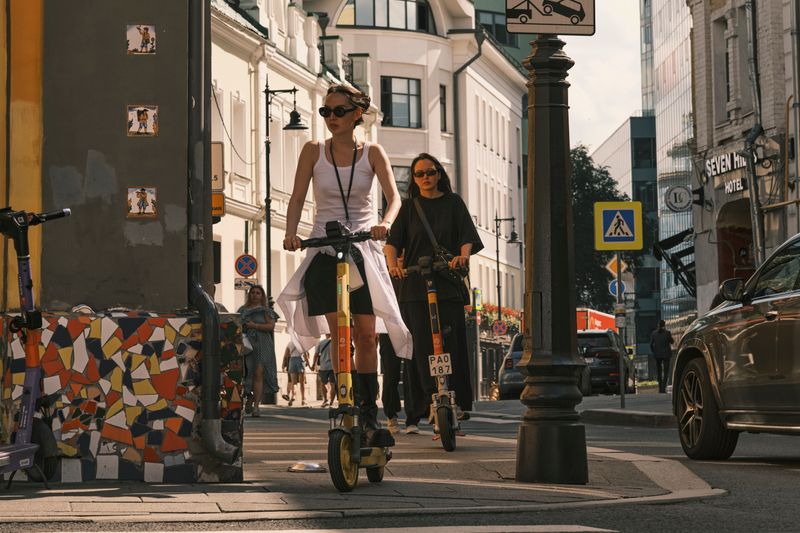
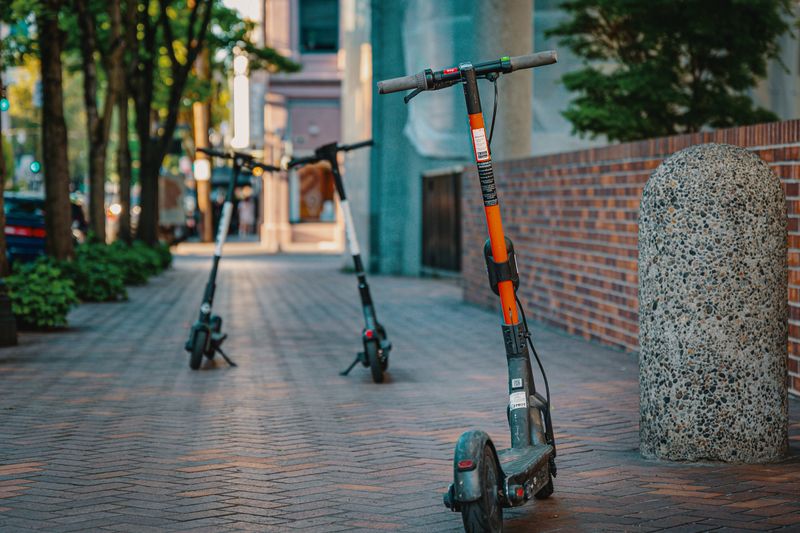
An electric scooter achieves it by making the motor the only source of propulsion, with the rider standing on a small platform between two small wheels. The scooter wins decisively on folded size and on the ability to be carried into a building or onto public transport. The bicycle wins on ride quality, range, load carrying and on the fact that it remains usable when the battery is empty.
Standing changes the physics of braking
On a bicycle, hard braking throws weight forward, and the rider counters it by pushing back against the pedals and shifting behind the saddle. A standing scooter rider has a small platform, feet close together and almost no ability to move their mass backwards. That limits how hard the front brake can be used before the rear wheel starts to lift, which caps the achievable deceleration.
The short wheelbase compounds it, because the weight has less distance to travel before it is over the front axle. The practical consequence is that a scooter needs more space to stop from the same speed than most riders expect.
Small wheels and the road surface
Scooter wheels are small and often solid or run at very high pressure, which means they cannot deform much to absorb a bump. A wheel meets a raised edge at an angle that depends on its diameter, and a small wheel meets it much more steeply.
That is why a lip a bicycle rolls over without comment can stop a scooter wheel dead and pitch the rider forward. Wet drain covers, tram rails and expansion joints deserve considerably more caution on small wheels than on large ones. Suspension on some scooters helps a great deal, but it does not change the geometry of how a small wheel meets an edge.
Where the power comes from and what happens when it stops
An electric bicycle usually assists your pedalling, so the total effort is shared and the machine reacts to what your legs are doing. A scooter is throttle-driven, so power arrives as a command rather than as a response, and the rider is a passenger with steering. When a bicycle battery empties you are left with a heavy bicycle that still gets you home under your own effort.
The bit that actually matters: when a scooter battery empties you are left with something to push, which is the failure mode most new users have not planned for.
That single difference tends to decide which machine suits a journey where being stranded is genuinely inconvenient.
Carrying things and carrying people
A bicycle has a frame with mounting points, so racks, baskets, panniers and child seats attach in well-understood ways. A scooter offers a handlebar hook and a small deck, both of which change handling badly when loaded with anything substantial.
Weight hung from scooter bars sits high and directly on the steering, which is the worst place to put it for stability. Carrying a passenger on a scooter is generally outside what the machine was designed for and is restricted in many places. Rules on passengers, minimum ages and where each machine may legally be ridden differ substantially between countries and change frequently, so check locally.
Frames, sizes and riding positions vary enormously; borrow before you buy wherever you can.
Choosing by journey rather than by machine
For a short hop with a train in the middle and no storage at either end, the scooter's folded size is genuinely hard to beat. For anything over a few kilometres, on poor surfaces, in the rain, or with shopping to bring back, the bicycle is a far better tool. Where you can park securely and legally is often the real deciding factor and gets considered last.
Both share the same battery care requirements, and both are worse in the wet than their owners assume. Neither is a toy, and both benefit from being learned somewhere quiet before being taken into moving traffic.
Side by side
| Consideration | What it means in practice |
|---|---|
| Two different answers to the same question | A standing rider cannot shift weight backwards under braking. |
| Standing changes the physics of braking | Small hard wheels transmit road defects instead of rolling over them. |
| Small wheels and the road surface | Pedals give an e-bike a working machine when the battery dies. |
The takeaway
Pick the one that matches the journey, and remember that only one of them still works when the battery is flat.
Most of riding well is being boring and predictable to everyone else on the road.
Questions readers ask
Why do scooters feel less stable than bikes?
Small wheels, a short wheelbase and a standing posture combine to make them react faster to road defects and to limit how much the rider can shift weight. None of it is a fault, it is just a different set of trade-offs.
Which has better range?
An electric bicycle almost always, because the rider is contributing power and the larger wheels roll more efficiently. A scooter carries the whole load on the battery, so the same capacity goes less far.
Also by Sarita Fernandes
- Hub Motors and Mid-Drives Do Genuinely Different JobsScooters & E-Mobility
- Regenerative Braking Gives Back Less Than People ExpectScooters & E-Mobility
- Nominal Watts, Peak Watts and What the Controller DecidesScooters & E-Mobility
- Rain, Puddles and Where Water Gets Into an Electric BikeScooters & E-Mobility