Cycling
Steel, Aluminium and Carbon: What the Material Really Changes
Frame material arguments usually describe feelings. The genuine differences are in how each material fails, how it is repaired and how tubes have to be shaped.
What follows is the working version of frame materials: the decisions in the order you actually meet them, with the reasoning attached.
Before you start
- Tube shape and wall thickness affect stiffness more than material alone.
- Steel can usually be repaired, aluminium and carbon usually cannot easily.
- Ride feel comes mostly from tyres, position and wheels.
Stiffness is a design choice, not a material property
Every common frame material can be built stiff or flexible, because the stiffness of a tube depends heavily on its diameter and wall thickness. Aluminium is less stiff than steel for the same shape, so aluminium frames use fatter tubes to compensate, which often ends up stiffer overall.
Carbon fibre is not one material but a layup, where the direction and quantity of fibres decide how the tube behaves in each plane. That is why two carbon frames can feel entirely different from each other while sharing a description on the label. Any claim that a material is inherently comfortable is describing typical designs in that material rather than physics.
Fatigue and how each one fails
Steel has a fatigue limit, meaning that below a certain stress it can in principle be cycled indefinitely without accumulating damage. Aluminium has no such limit, so every stress cycle contributes some fatigue, which is why aluminium frames are designed with more margin and finite lives. In practice both outlast most riders' interest in the bike, and frames far more often die from crashes and corrosion than from fatigue.
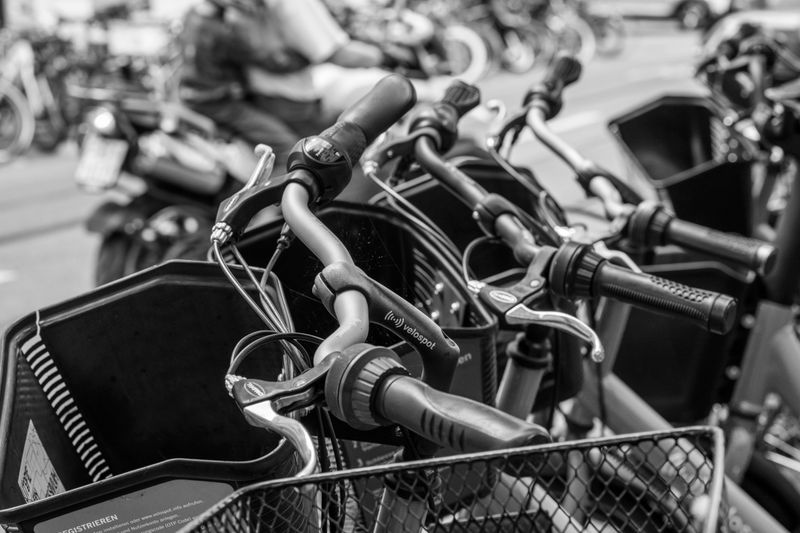
Come the wet months, steel usually fails slowly and visibly as a crack you can find during cleaning, which gives some warning before anything separates. Carbon can fail suddenly once damaged, and impact damage may not be visible on the surface, which is the material's real drawback for a bike left in a bike rack.
Repair and what happens after a knock
A steel frame can be welded or brazed by a competent framebuilder, and a bent tube can sometimes be straightened, so a damaged frame is not automatically finished. Aluminium can be welded but requires heat treatment afterwards to restore properties, which makes repair uneconomic for most frames.
Carbon can be repaired by specialists who rebuild the layup, and good repairs are genuinely strong, but finding one is harder and the cost is real. For a bike locked outside in a city, repairability is a more useful property than the last few grams of weight saving. If a carbon frame takes a hard knock, have it inspected rather than assuming that undamaged paint means undamaged structure.
Corrosion and the weather
Steel rusts, and the place it does so is usually inside the tubes where road spray and condensation collect without ever drying out. Frame savers and internal wax treatments exist for exactly this, and are worth applying to a steel bike ridden through salted winter roads.
Aluminium corrodes differently, forming a surface oxide that mostly protects it, although galvanic corrosion at fittings can seize components in place. Carbon does not corrode, though its metal inserts and fittings can, and clamping it incorrectly does more damage than any weather.
A drain hole at the bottom bracket that is clear rather than blocked does more for a steel frame's life than any paint quality.
Where the ride feel actually comes from
Tyre volume and pressure change vertical compliance by far more than any frame material difference, because the tyre is the largest spring in the system. The seatpost is next, since a long exposed post flexes noticeably, which is why the same frame feels different for a tall and a short rider. Handlebar, stem and saddle choice decide how much road texture reaches your hands and sit bones.
Frame material is somewhere below all of those in influence, though it is the one printed on the down tube. Test this by riding the same bike at two very different tyre pressures, which will change the ride more than any frame swap you could afford.
Frames, sizes and riding positions vary enormously; borrow before you buy wherever you can.
Choosing for a commute
For a bike ridden daily and parked in public, the criteria are repairability, resistance to weather, mounts for racks and mudguards, and cost of replacement. Steel and aluminium both score well on those, and the choice between them matters far less than whether the bike takes the accessories you need.
Mid-traffic, carbon is a poor match for a bike that will be crammed into racks and clamped by strangers, regardless of how well it rides. The frame is also rarely the thing that fails, since wheels, drivetrains and bearings all wear out long before a frame does. Buy the bike whose equipment and fit suit your route, and treat the material as a footnote rather than the headline.
The takeaway
Pick the frame that carries your luggage and survives your bike rack, then argue about tubing over a coffee.
Fix the small rattle. Every large repair began as one.
Questions readers ask
Is steel more comfortable than aluminium?
Not inherently. Tube design, tyre pressure and seatpost length affect comfort more, and both materials can be built harsh or forgiving.
Is carbon safe for everyday riding?
Yes, when undamaged and correctly assembled. The concern for commuting is impact damage that is hard to see, so have it inspected after any hard knock.