Scooters & E-Mobility
Deck Height Decides How an Electric Scooter Rides
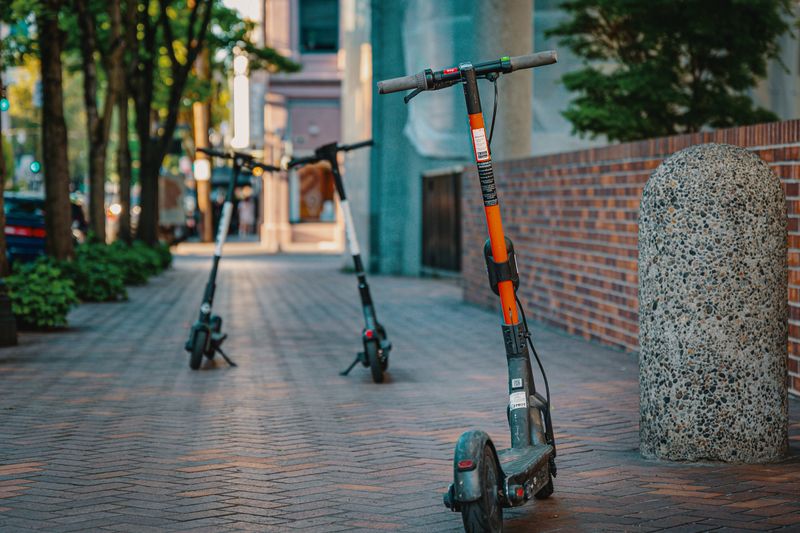
The distance between a scooter's standing platform and the road governs stability, obstacle clearance and how much battery can be carried, making it a central design compromise.

Electric scooters look broadly alike and ride very differently. A large part of that difference comes from how high the deck sits above the road.
A low deck lowers the centre of mass
The rider is by far the heaviest component, and their weight acts through the deck. Lowering it lowers the combined centre of mass substantially.
That improves stability, because the machine resists tipping and responds less abruptly to weight shifts. It is why low-deck scooters feel planted at speed.
Stepping on and off is also easier, and the step down to the road is shorter. Both matter on a machine used for short urban hops with frequent stops.
Clearance is what a low deck gives up
Kerbs, speed humps and broken road edges are the obstacles a scooter meets. A low deck grounds on them, which can stop the machine abruptly.
The deck also has to clear the road when the scooter is leaned into a turn. Very low platforms limit lean angle before the tyres reach their grip limit.
Riders learn where their machine grounds and route around it. That is a workable adaptation and it constrains where the scooter can go.
The battery lives in the deck
On most designs the battery pack sits inside the standing platform, which is the only structure long and flat enough to hold it.
Deck thickness therefore sets an upper limit on pack capacity. A thin deck means either a smaller pack or a pack spread over a longer platform.
This is the compromise behind the correlation between range and deck height. The relationship is structural rather than a matter of specification choices.
Small wheels magnify the clearance problem
Scooter wheels are small, which means the deck sits low relative to the axle by necessity. There is little room to raise the platform without raising the whole machine.
A larger wheel raises the axle and allows more deck height for the same ground clearance. It also improves how the machine handles surface defects.
Larger wheels add weight and bulk, which conflicts with the portability that makes scooters attractive. Every gain here is paid for somewhere else.
Deck length and width shape the riding stance
A short deck forces feet into a fore-and-aft stance, which is stable in the direction of travel and poor at resisting side loads.
A longer deck allows feet side by side, giving more control over weight distribution. It also makes the machine harder to carry and store.
The stance matters most under braking, when weight transfers forward. Riders who cannot move their rear foot back have less ability to manage that transfer.
Questions readers ask
Why do my e-bike brakes fade on long hills?
Continuous braking heats pads and rotors until friction drops. Brake firmly in intervals rather than dragging, and consider larger rotors if it happens routinely on your route.
Do I need hydraulic brakes on an e-bike?
Not always, but they give more power for less hand effort, which matters on a heavier machine. For loads, hills or high average speeds they are the sensible choice.