Cycling
Kickstands, Bells and the Small Parts Transport Riders Actually Use
The fittings that get left off a new bicycle are the ones that decide whether you ride to the shops. None of them make you faster.

This is less a set of instructions about utility bicycle fittings than an argument, and it is worth saying so at the start.
The argument in brief
- A transport bike spends most of its life parked and loaded.
- A twin-leg stand holds a loaded machine that a single leg drops.
- Frame eyelets decide what you can bolt on without clamps.
The fittings a sport bike leaves off
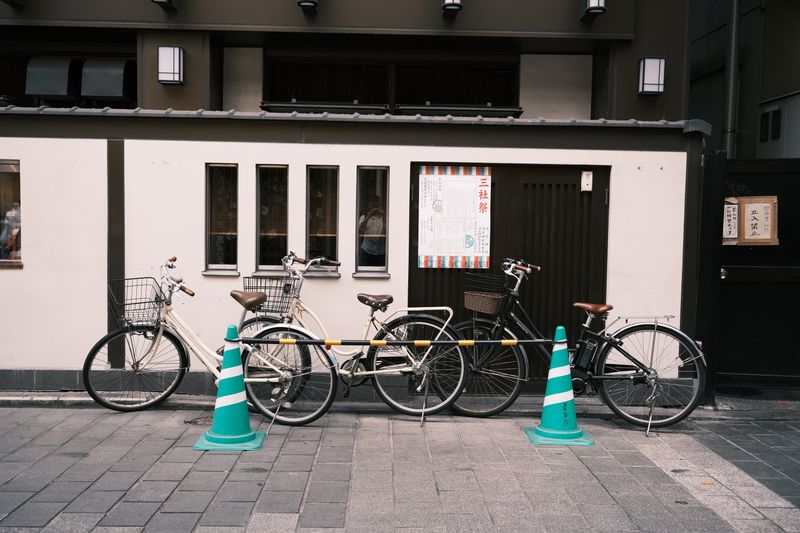
A bicycle sold for sport is optimised for a rider who arrives, rides and puts it away indoors without ever needing to park it in public. A transport bicycle spends most of its life stationary outdoors, loaded with shopping or a bag, waiting for someone to come back to it.
That single difference explains almost every fitting a utility bike carries and a racing frame does not, from a stand to a chain cover. None of these parts make the machine faster, and several make it marginally slower by an amount nobody riding to work would ever detect. What they do is remove small frictions that otherwise accumulate until riding somewhere feels like more effort than taking the car instead.
Why a kickstand is harder than it looks
A stand has to hold a bicycle upright against a load that may sit high on a rear rack and shift as you let go of the bars. A single-leg stand parks the bike leaning at an angle, which works for an empty machine and becomes unstable the moment weight goes onto one side. A twin-leg stand lifts the rear wheel clear and holds the frame level, which is why cargo and delivery machines almost always carry one.
The bit that actually matters: mounting matters as much as the stand itself, because a plate clamped onto lightweight chainstays concentrates load on tubing never designed to take it. Frames built for transport usually include a dedicated mounting plate behind the bottom bracket, and fitting a stand to a frame without one deserves a careful look.
A bell is a timing device, not a horn
A bell does one useful thing, which is to tell somebody ahead of you that a bicycle is approaching from behind before it actually arrives. Rung late it functions as a demand to move, which is why it irritates people on foot and produces the sudden sideways step you were trying to avoid. Rung early and gently it gives a person time to look, decide and drift, and the whole interaction resolves without either of you changing speed much.
A spoken greeting sometimes works better than a bell, because a voice carries information about which side you are on and how close you have already got. In several countries a bell is a legal requirement on a bicycle sold or ridden on the road, but this varies by jurisdiction and is worth checking locally.
Lights that never leave the bike
Removable battery lights spend a good share of their existence on a desk, at the bottom of a bag, or flat, which is exactly where their failure lives. A hub dynamo generates power from the front wheel whenever it turns, so lighting is available on every ride including the one you did not plan. The drag from a modern dynamo hub is small and constant, and most riders using one for transport stop noticing it within a week.
The trade is a heavier front wheel, a wiring run that can chafe where it is routed badly, and a repair less simple than swapping a battery unit.
Permanently fitted lighting also survives the specific failure where a meeting overruns and the ride home turns out to be in the dark.
Somewhere to attach things
Threaded eyelets on the frame and fork are what turn a bicycle into something you can bolt a rack, a mudguard or a stand onto. Frames without them push you towards clamp-on fittings, which do work but concentrate load onto round tubes and tend to slip and rattle loose over time.
Come the wet months, a rack rated for a given load is rated for weight pressing down on it, and a heavy bag swinging outwards loads the mounting in a different direction entirely. Straps and elastic cords fail in a characteristic way, by loosening gradually over a ride and letting a load drift towards the wheel or the chain. Anything that can reach a spinning wheel needs checking before you set off, because a strap caught in the spokes stops the bicycle immediately and without warning.
Frames, sizes and riding positions vary enormously; borrow before you buy wherever you can.
Why new bikes arrive stripped
Bicycles are frequently sold on weight and price, and every fitting added at the factory works against both of those numbers on a specification sheet. A stand, mudguards, a rack and permanent lighting together add real mass, which reads badly beside a competing model listed without any of it.
Come the wet months, retrofitting the whole set afterwards usually costs more than the same equipment would have done as original fitment and rarely integrates as neatly. In countries where cycling is mostly transport rather than sport, bicycles routinely arrive with all of it fitted and nobody regards that as unusual. If you intend to use a bike for errands, judging it by what it is missing tells you more than judging it by what it weighs.
The takeaway
The parts that make a bicycle useful for errands are the ones the specification sheet treats as dead weight.
Fix the small rattle. Every large repair began as one.
Questions readers ask
Is a kickstand bad for a bicycle frame?
A stand clamped to thin chainstays can dent or crush tubing, because the clamp concentrates load on a small area. Frames intended for transport carry a dedicated mounting plate, and if yours does not, ask a mechanic before fitting one.
Do I legally need a bell?
It depends entirely on where you are. Some countries require one on every bicycle, others require it only at the point of sale, and others not at all. Check the rules where you ride rather than assuming.