Cycling
Bottom Bracket Height and Why You Clip a Pedal
How far the pedals sit above the road decides whether a rider can pedal through corners, and it trades directly against stability and ease of putting a foot down.

Pedal strike surprises riders who have never thought about it. The dimension responsible is the height of the crank axle above the ground, and it is a deliberate design choice.
The pedal traces a circle that leans with the bike
At the lowest point of its rotation, a pedal sits close to the road. When the bike leans into a corner, that lowest point moves closer still.
The clearance available is the height of the axle minus the crank length, adjusted for lean angle. Past a certain lean, the pedal reaches the road while the tyre is still gripping.
This is why pedal strike happens at speeds and angles that otherwise feel safe. The tyre has more grip available than the geometry allows the rider to use.
Low bottom brackets buy stability
Lowering the crank axle lowers the whole bike's centre of mass, because the rider's weight sits partly on the pedals. A lower centre of mass resists sudden changes in lean.
The bike feels planted and steady, particularly when loaded. This is why touring and transport bikes generally sit lower than sport bikes.
It also shortens the distance to the ground when stopping. Being able to put a foot down without leaving the saddle entirely is a real advantage in traffic.
High bottom brackets buy clearance
Raising the axle allows pedalling through corners and over obstacles. Off-road bikes and track bikes both sit high, for different reasons.
The cost is a bike that feels more perched and less settled. Loaded with luggage, that character becomes more pronounced.
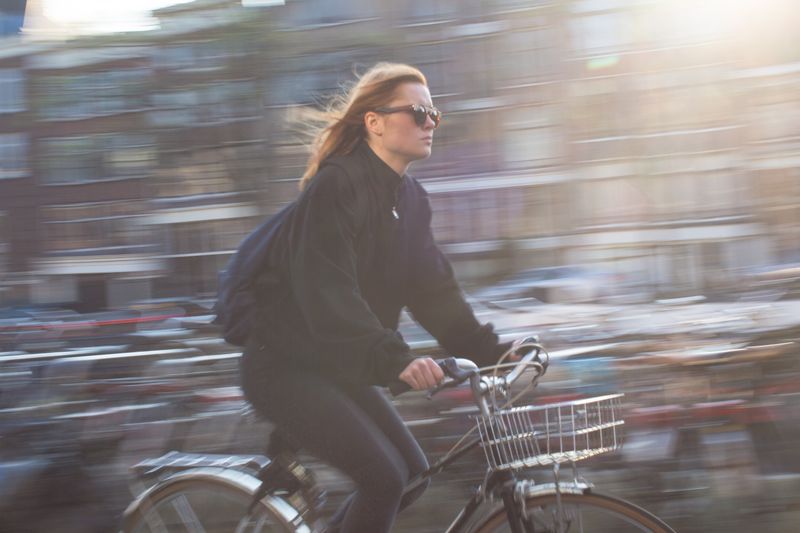
For city riding the clearance is rarely needed. Kerbs and street furniture are avoided by steering rather than by leaning past the point of pedal strike.
Crank length shifts the same balance
Shorter cranks raise the lowest point of the pedal circle without changing the frame. They are a way of buying clearance on an existing bike.
They also change the leverage available and the range of motion at the knee and hip. Neither effect is large within the normal range of lengths.
Riders who strike pedals regularly on a bike they otherwise like often find shorter cranks a cleaner solution than changing the bike.
Where it matters most in the city
Tight turns at low speed, such as pulling out of a side road, are where pedal strike is most likely. Speed is low and lean angle is high.
Uneven surfaces compound it. A pedal that clears a flat road may still catch a raised drain cover or a broken edge on the inside of a turn.
The habit that prevents it is simple and worth building deliberately. Keeping the inside pedal at the top through any tight turn removes the possibility entirely.
Questions readers ask
Is a lighter bike faster?
On climbs and accelerations, slightly. On flat ground at commuting speed, air drag dominates and a kilogram of frame is close to irrelevant.
Should I remove the rack to save weight?
Only if you never carry anything. Moving a bag off your back onto the bike improves comfort and sweat far more than the rack's weight costs you.