Cycling
Mudguards Are the Cheapest Upgrade a Wet Ride Can Have
Rain does not make you as wet as the road does. Most of the water arriving on a rider in bad weather has been thrown up by their own wheels.
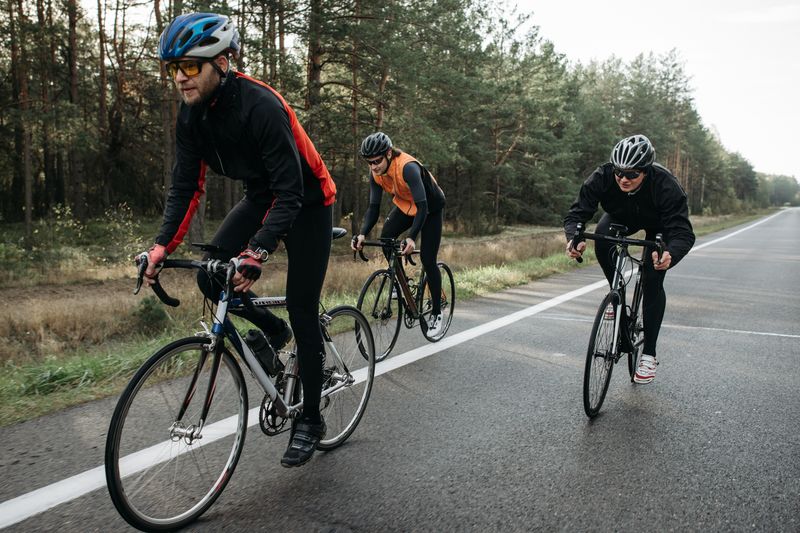
This looks at mudguards from the practical end — what holds up once conditions stop being ideal.
What holds up in practice
- Road spray carries grit that accelerates drivetrain and brake wear.
- Full-length guards with a mudflap protect the rider behind as well.
- Clearance and secure fixing matter more than the material.
Where the water on your back comes from
A wheel turning at commuting speed throws a continuous fan of water upwards and forwards, which is why your front is wet even in light rain. The rear wheel throws water up your back in a narrow stripe, producing the distinctive soaked line that identifies an unguarded bike from behind. That spray also carries whatever the road holds, including grit, oil, brake dust and in winter road salt.
So the water arriving on your clothes is not clean rainwater, which is why it stains and why it smells. Stopping it at the wheel is dramatically more effective than trying to keep it out with clothing after it has already been launched.
What spray does to the bike
Grit suspended in road water lands on the chain and the sprockets, where it acts as a grinding paste between metal surfaces under load. That is the main reason drivetrains wear far faster in winter than in summer, and it happens whether or not you clean the bike afterwards.
Mid-traffic, spray also coats brake surfaces, and on rim brakes the grit embeds in the pads and machines the braking track off the rim. Bearings suffer next, since water forced past a seal displaces grease and starts corrosion inside the hub or bottom bracket. A set of full-length guards therefore pays for itself in chains and cassettes long before it pays for itself in laundry.
Full length versus clip-on
Full-length guards mount to the frame and cover the wheel from behind the fork crown to well down towards the ground. Clip-on guards attach to the seatpost or down tube and cover a short arc, which stops the worst stripe up the back and little else.
The gap matters because water leaves the tyre tangentially, so a guard that stops early simply relocates where the spray lands. A mudflap extending the front guard low towards the road is what keeps water off your feet and out of your shoes. It also keeps spray off anyone riding behind you, which is the reason group riders are particular about it.
Fitting them without the rattle
Most complaints about mudguards are really complaints about badly fitted mudguards that rub, rattle or shift out of line. The guard should follow the curve of the tyre with an even gap all the way round rather than being close at one point and distant at another. Stays should be cut to length and capped, and every fixing checked after the first few rides because they settle and loosen.
Leave enough clearance for grit and wet leaves to pass, since a guard sitting almost on the tyre will eventually jam it.
Safety release fittings at the fork are worth having, because a front guard that jams can stop the wheel abruptly.
Materials and what they trade
Plastic guards are light, cheap, quiet and flex enough to survive knocks, but they can crack in cold weather after a few years. Metal guards are more durable and hold their shape better, though they can be noisier and are more easily dented into rubbing.
Wider guards catch more spray, and a guard barely wider than the tyre lets water escape around its edges. Match the guard width to the tyre generously rather than exactly, since the same bike may run wider tyres in winter. None of these differences matters nearly as much as whether the guard is full length and properly aligned.
Range and charging figures are quoted under conditions nobody commutes in.
When they are the wrong answer
Some frames have no mounting points and no clearance, which is common on road bikes designed around racing rules. In that case a well-chosen clip-on set still removes most of the rear stripe, and a front one still helps with the feet. Riders whose route is entirely off-road on soft ground sometimes prefer no guards, because thick mud packs into them and locks the wheel.
For everyone riding on tarmac in a country with weather, the argument against fitting them is essentially aesthetic. The bike looks slower and arrives drier, which is a trade most commuters make happily after one wet winter.
The takeaway
Full length, properly aligned, with a mudflap at the front — then forget about them for years.
Fix the small rattle. Every large repair began as one.
Questions readers ask
Do mudguards really help if it is not raining?
Yes, on wet roads after rain has stopped. Standing water on the surface is the source of most spray, and it lingers long after the sky clears.
Will they slow me down?
Marginally, from a little extra weight and air disturbance. It is far less than the effort you lose riding in soaked clothing.