Cycling
Brake Levers Fit Hands, Not Bikes
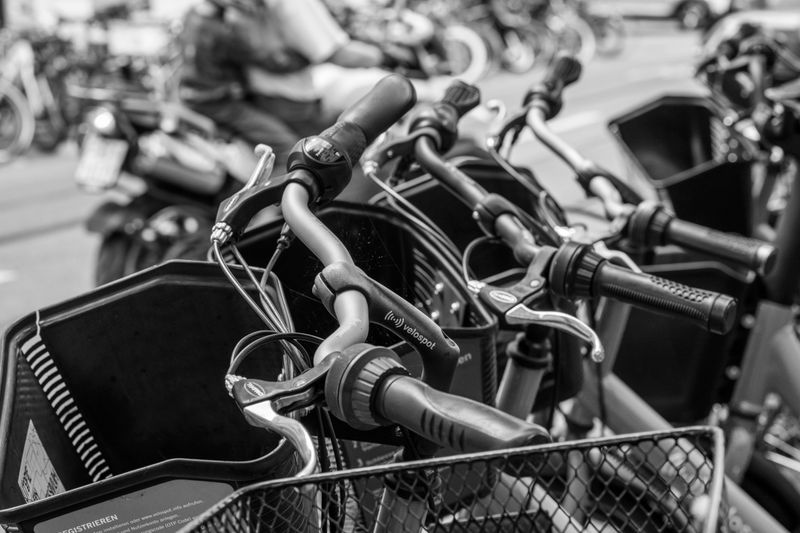
Lever reach and shape determine how much force a rider can apply, which makes them a fit component rather than a fixed part of the braking system.

Braking is usually discussed in terms of the brake itself. How much stopping a rider can actually produce depends heavily on whether the lever suits their hand.
Force comes from the fingers at their strongest position
A hand generates the most force when the fingers are moderately curled rather than fully extended. A lever positioned too far from the bar puts them at the weak end of that range.
Riders with smaller hands meet this constantly, because default lever positions are set for larger ones. The result is less braking force from an identical brake.
It also affects how quickly force can be applied. Reaching before pulling adds a delay at the point where delay matters most.
Reach adjustment exists on more brakes than riders realise
Most modern levers have a screw that moves the resting position closer to the bar. It is often factory-set at the far end of its travel and never touched.
Adjusting it is a small job with an immediate effect. The lever should sit where the fingers naturally fall with the hand relaxed on the grip.
On cable brakes, moving the lever closer usually requires taking up cable slack as well. Skipping that step trades reach for lever travel and produces a vague feel.
Lever angle changes which muscles do the work
A lever angled too far down forces the wrist to bend to reach it. That position is weaker and becomes uncomfortable over longer rides.
The usual guidance is to set the lever so the forearm, wrist and finger form a straight line when braking. It is a starting point rather than a rule.
Where a rider frequently uses more than one hand position, the compromise angle matters. Setting it for the position used in traffic is the sensible priority.
One finger or two changes the requirement
Hydraulic disc brakes generate enough force that one finger is usually sufficient. That allows the remaining fingers to keep a firm grip on the bar.
Cable rim brakes often need two, which reduces grip security on rough surfaces. Riders who cannot brake and hold on at once are being limited by the system, not their technique.
The lever's shape matters here. Long levers designed for multiple fingers behave differently from short ones intended for a single finger.
Fit problems get misread as brake problems
A rider who cannot stop confidently often concludes the brakes are inadequate and replaces them. If the lever fit was the constraint, the new brake underperforms too.
Checking reach, angle and cable tension before spending anything is the cheaper sequence. These adjustments are free and take less time than fitting a new brake.
Where they do not resolve it, the diagnosis is now sound. Anything bought after that is addressing the actual limitation.
Questions readers ask
Is a lighter bike faster?
On climbs and accelerations, slightly. On flat ground at commuting speed, air drag dominates and a kilogram of frame is close to irrelevant.
Should I remove the rack to save weight?
Only if you never carry anything. Moving a bag off your back onto the bike improves comfort and sweat far more than the rack's weight costs you.