Cycling
Grips and Tape Change Comfort More Than Suspension Does
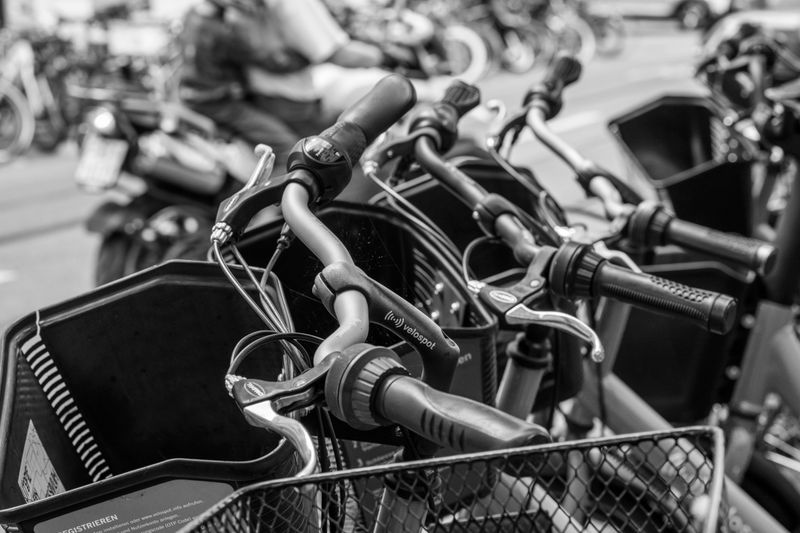
Hand contact points absorb high-frequency vibration that suspension is too slow to react to, which is why cheap grip changes often outperform expensive fork upgrades.

Riders with uncomfortable hands often consider a suspension fork. The vibration causing the discomfort is usually of a kind suspension cannot address.
Suspension and vibration operate at different frequencies
A suspension fork responds to inputs by compressing, which requires the whole assembly to move. That takes time, and it works well for larger, slower impacts.
Road buzz arrives far faster than the fork can react. The assembly's own mass and the friction in its seals prevent it from responding to small, rapid inputs.
The result is that a suspension fork can smooth potholes while leaving the constant vibration of a rough surface almost untouched.
Damping at the contact point works on exactly that frequency
A compliant grip or a thick bar tape deforms and recovers many times a second without any mechanism. There is nothing to overcome except the material itself.
This is the frequency range that causes numbness and fatigue. Reducing it changes how hands feel after an hour more than any fork adjustment will.
The materials also spread load across a wider area of the palm. Pressure and vibration are separate problems and both are addressed here.
Grip diameter is a fit variable
A grip that is too thin forces the hand into a tighter closure, which increases muscle tension and reduces circulation. A grip too thick prevents a secure hold.
The correct diameter varies with hand size and is not standard across brands. Riders with larger hands frequently find stock grips undersized.
Adding tape underneath a grip is a cheap way to increase diameter. It is a common workshop fix and it works better than it sounds.
Shape decides where the pressure lands
A round grip concentrates weight on a narrow strip of palm. A grip with a flared support surface spreads it across the base of the hand.
Those supports must be angled correctly to help. Set wrongly, they place pressure exactly where the nerve running through the palm is most vulnerable.
Small rotations make a large difference here. This is an adjustment worth making over several rides rather than fixing at the first attempt.
Gloves complete the system rather than replacing it
Padded gloves add damping and can also add bulk that forces a wider grip on the bar. Very thick padding sometimes increases pressure rather than reducing it.
Their main contribution is often keeping the hand from sliding, which reduces the grip force required. A secure hand can be a relaxed hand.
Taken together, grips, tape and gloves cost a fraction of a fork and address the actual mechanism. That is why they are the first thing to change.
Questions readers ask
Is a lighter bike faster?
On climbs and accelerations, slightly. On flat ground at commuting speed, air drag dominates and a kilogram of frame is close to irrelevant.
Should I remove the rack to save weight?
Only if you never carry anything. Moving a bag off your back onto the bike improves comfort and sweat far more than the rack's weight costs you.