Riding the City
Who Rides Tells You What a City Got Right
Count the riders and you learn little. Look at who they are, and you learn almost everything about how the conditions actually feel.
What follows is an argument about who cycles, and about where the received version of it stops being true.
The argument in brief
- A narrow rider demographic indicates conditions only some will tolerate.
- Children and older riders appear when routes feel genuinely safe.
- Trip purpose reveals whether cycling is transport or recreation.
The diagnostic nobody needs equipment for
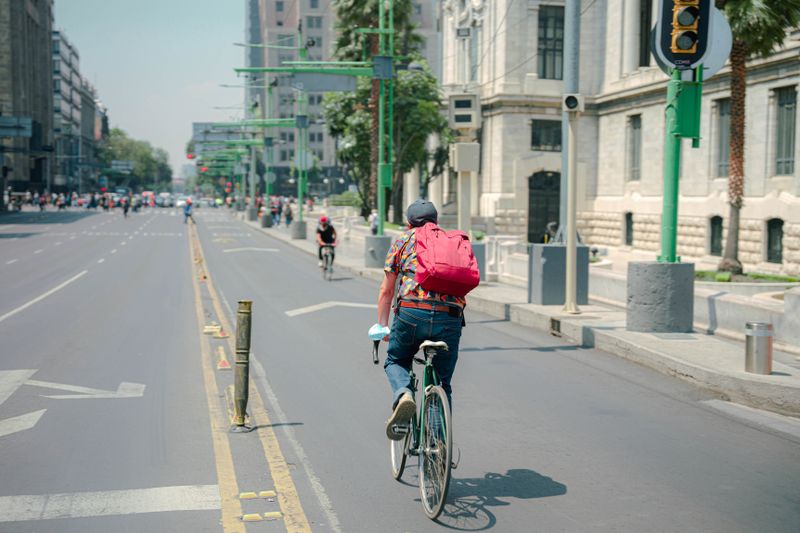
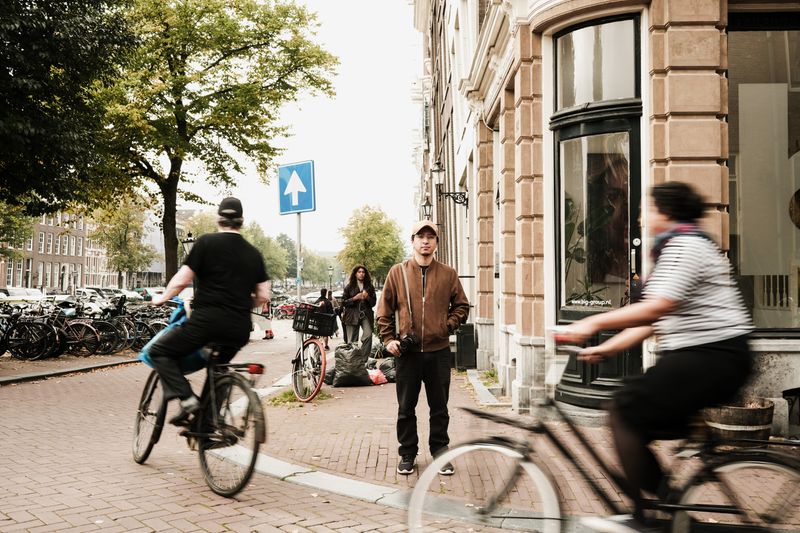
Standing on a street for ten minutes and looking at who is riding past tells you more than most published figures. If the riders are overwhelmingly young, fit adults in specialist clothing, the conditions demand confidence and speed.
If they include children, older people, people carrying shopping and people in ordinary clothes, the conditions do not. That distinction holds across very different cities, which is what makes it a useful diagnostic rather than a local observation. It also explains why counting riders alone can be misleading, since a rising count can still reflect the same narrow group riding more.
Why the demographic narrows
Where riding requires mixing with fast traffic, the people who do it are the ones willing to accept that, which is a small subset. Everyone else does not complain about the conditions, they simply do not ride, which makes their absence invisible.
In the saddle, surveys across many countries consistently find that fear of traffic is among the most common reasons given for not cycling. That means the group riding is a poor guide to the group who would ride under different conditions. Planning around current riders therefore reproduces the current situation, which is a well-known trap in transport planning.
What children riding indicates
Parents make risk decisions conservatively, so children riding independently indicates conditions adults judge to be genuinely benign. It also indicates that the route network connects the places children go, which is a much finer-grained requirement than a commuter corridor. School journeys are short and concentrated in time, which makes them a demanding test of a network's local completeness.
By the second week of riding, cities where children cycle to school have usually addressed traffic speed on residential streets rather than only building main routes. The presence of children is therefore a signal about the whole street environment rather than about any single facility.
Load, purpose and clothing
Riders carrying shopping, tools or children are using the bicycle as transport, which requires a different network from sport riding. Ordinary clothing indicates riders who are not changing at the other end, which means the journey is not being treated as exercise. Cargo bikes appearing in numbers indicate parking, storage and route widths that accommodate them, all of which are specific requirements.
Trip purpose data, where it is collected, distinguishes a leisure network from a transport one more clearly than volume does.
A city with heavy weekend riding and empty weekday streets has built recreation rather than transport, which is a legitimate choice made accidentally.
The gender pattern and what it suggests
Cycling in countries with poor conditions tends to show a marked imbalance in who rides, and the imbalance narrows as conditions improve. In places with extensive separated networks the split is close to even, which is a consistent enough pattern to be treated as informative. The explanations offered for this are contested and probably multiple, including perceived safety, trip patterns and carrying responsibilities.
Mid-traffic, what is less contested is the correlation, which makes the balance a useful indicator regardless of the mechanism. It is a diagnostic rather than an explanation, and treating it as either more or less than that leads to poor conclusions.
Frames, sizes and riding positions vary enormously; borrow before you buy wherever you can.
Using the observation honestly
The point of the exercise is not to judge who rides but to read what their composition says about the conditions. A narrow demographic is information about a street environment rather than a criticism of anyone using it.
It also predicts what happens if conditions improve, since the absent groups are the ones with the most latent demand. Cities that have improved conditions have generally seen the demographic widen before the total count rises sharply. Watching who rides on a street before and after a change is a cheap and surprisingly revealing form of evaluation.
The takeaway
Stand on a street for ten minutes and look at who rides past, because that is a network audit anyone can do.
Most of riding well is being boring and predictable to everyone else on the road.
Questions readers ask
Why does it matter who cycles rather than how many?
Because a narrow demographic indicates conditions only confident riders will tolerate. A count can rise while the same small group rides more, which tells you nothing about whether the street works for anyone else.
Is children cycling really a good indicator?
It is one of the more revealing ones, because parents make conservative risk judgements and because school journeys test the local network densely rather than along a single corridor.