Riding the City
Painted Lanes Are Not Infrastructure
A line of paint costs almost nothing and appears on every progress report. What it changes about the physical situation of a rider is close to nothing too.
Treat the sections below as a sequence. With painted cycle lanes, getting the early decisions right makes the later ones much easier.
Before you start
- Paint provides no physical protection and no enforcement.
- Narrow lanes can encourage closer overtaking than no lane at all.
- Lanes routinely run through door zones and disappear at junctions.
What paint actually does
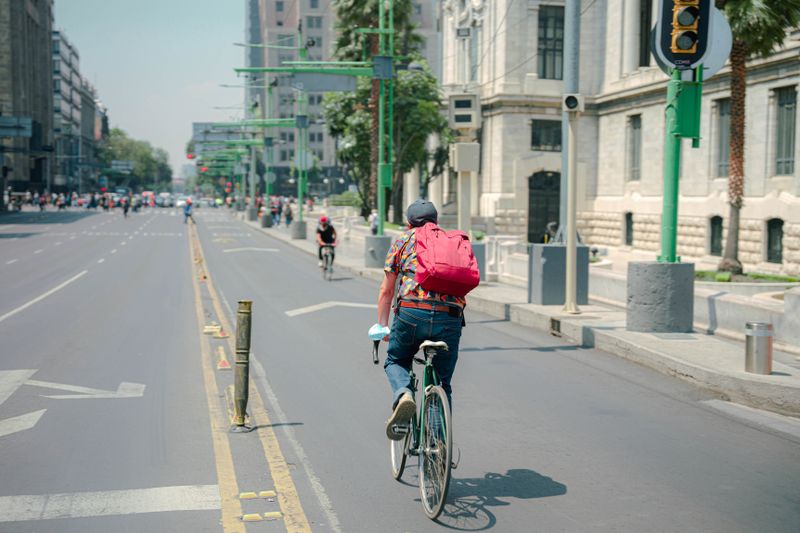
A painted lane marks an area of carriageway and communicates an expectation, and that is the entire extent of its function. It does not prevent a vehicle entering the space, and enforcement against parking or driving in such lanes is often minimal.
It does not change the geometry of the road, the speed of traffic or the sightlines at junctions. In the wet the paint itself is more slippery than the surrounding tarmac, which is a small but genuine hazard. None of this makes paint worthless, but it does mean it should not be counted as protection.
The narrow lane problem
Research on overtaking distances has found that drivers sometimes pass closer where a painted lane exists than where it does not. The proposed explanation is that the line defines a boundary drivers position against, rather than judging the cyclist's actual space needs.
A lane narrower than the space a rider needs therefore encodes an unsafe passing distance into the road markings. Riders often respond by riding outside the lane, which invites conflict with drivers who believe the lane is compulsory. Where lanes are too narrow to be useful, no lane and a wider shared space can be the better outcome.
Where the paint goes wrong
Painted lanes are routinely marked alongside parking bays, placing riders in the reach of an opening door. They frequently end at junctions, which is exactly where guidance would be most valuable. They are often used for parking, loading and waiting, which converts them into an obstacle course.
The bit that actually matters: drainage grates, utility covers and the worst of the surface damage tend to sit within them. Sweeping schedules rarely prioritise them, so debris accumulates in the lane rather than on the carriageway.
Why they get built anyway
Paint is cheap, quick, and requires no reallocation of road space or reduction in motor traffic capacity. It can be delivered within a single budget cycle and photographed, which makes it politically attractive.
Mid-traffic, it also generates far fewer objections than removing parking or a traffic lane, which is what real separation requires. The result is a large stock of lanes that appear in statistics as cycling provision and change very little.
Recognising that is not cynicism, it is the reason serious design guidance now discourages the practice on busier roads.
Where paint is genuinely useful
On quiet streets with low traffic volumes and speeds, markings can reinforce that cyclists are expected and legitimate. Advanced stop areas at signals, where they are respected, give riders a head start and improve visibility at junctions.
Coloured surfacing across conflict points draws attention to a crossing and can support drivers in expecting riders there. Contraflow markings on one-way streets create genuinely useful permeability at very low cost. The distinction is between paint that changes a rule or an expectation and paint that pretends to be a barrier.
Anything structural — forks, steerer, brake mounts — is worth having a mechanic sign off.
Judging a scheme honestly
Ask whether the design would be comfortable for a competent twelve-year-old, which is a standard used in several design guides. Ask what happens at each junction, and whether the provision continues or evaporates.
With a loaded rack, ask what the motor traffic speed and volume are, since paint on a fast busy road is doing nothing about the actual hazard. Ask whether the space is physically defensible against parking, because a lane full of vans is not a lane. A scheme that passes those questions is worth supporting, and one that does not is worth saying so about during consultation.
The takeaway
Paint changes expectations, not physics — judge a lane by what stops a van parking in it.
The bike you ride daily beats the better bike you keep indoors.
Questions readers ask
Are painted cycle lanes better than nothing?
On quiet streets they can reinforce expectations usefully. On busy fast roads a narrow painted lane can encourage closer overtaking and place riders in door zones, so it is not automatically an improvement.
Do I have to stay inside a painted lane?
That depends on the country and on whether the lane is advisory or mandatory. Check your local rules, because the same markings mean different things in different places.