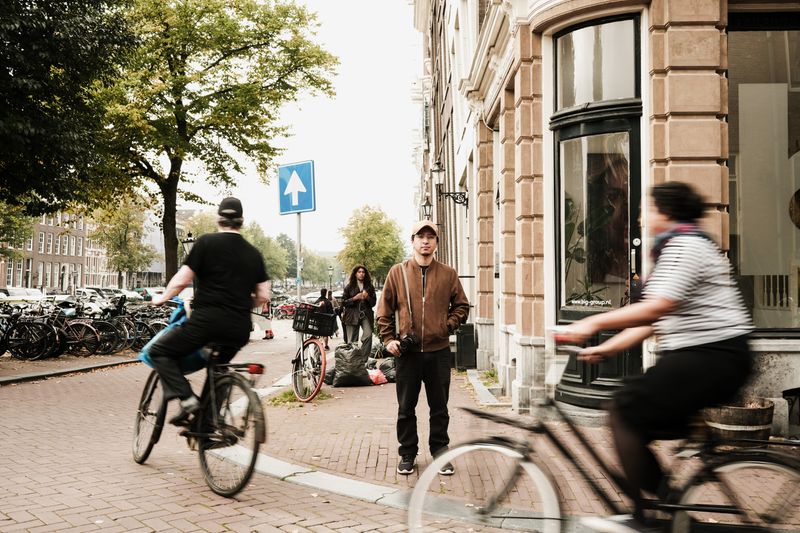
Riding the City
Somewhere to Leave the Bike Decides Whether People Ride
Parking is the least discussed part of cycling infrastructure and one of the most decisive. A journey by bike is only as practical as its two ends.
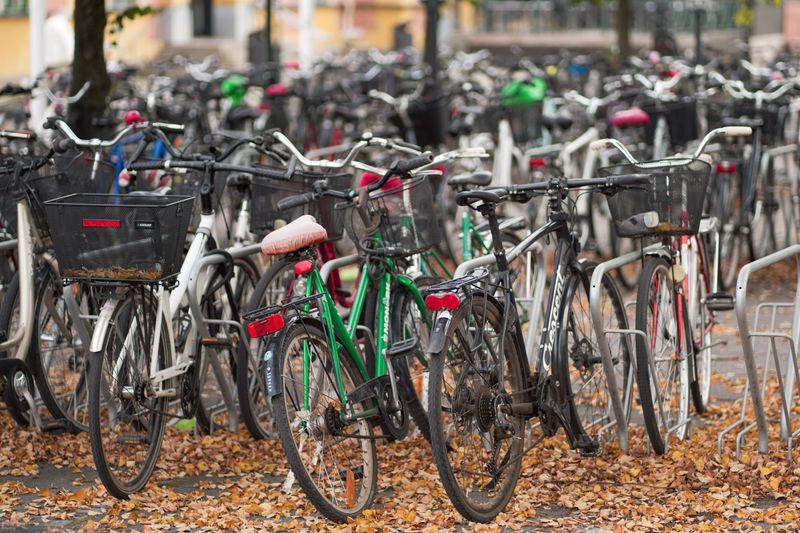
What follows is the working version of bicycle parking: the decisions in the order you actually meet them, with the reasoning attached.
Before you start
- Theft is a major and persistent deterrent to cycling.
- Home storage matters as much as destination parking.
- Stands must support the frame, not just the wheel.
The trip ends nobody plans for
Cycling policy attention concentrates on the moving part of a journey, and the stationary parts receive far less. Yet every trip begins by retrieving a bike and ends by securing one, and both of those can be the hardest part.
A rider who cannot park safely at their destination will not make the trip regardless of how good the route is. The same applies at home, where a bike behind three other bikes in a shared hallway is effectively unavailable. Parking is therefore not an accessory to cycling infrastructure but a component of it.
Theft as a deterrent
Bike theft is a high-volume crime in most cities and is under-reported because recovery rates are low. Surveys in several countries have found that a significant proportion of victims do not replace the stolen bike, or replace it and cycle less. The effect is largest on people who bought a bike recently and had not yet established the habit.
The bit that actually matters: it also pushes riders towards cheap, poorly maintained bikes, which are less pleasant to ride and reinforce the decline. Reducing theft is therefore a cycling promotion measure, though it is rarely funded as one.
What good parking looks like
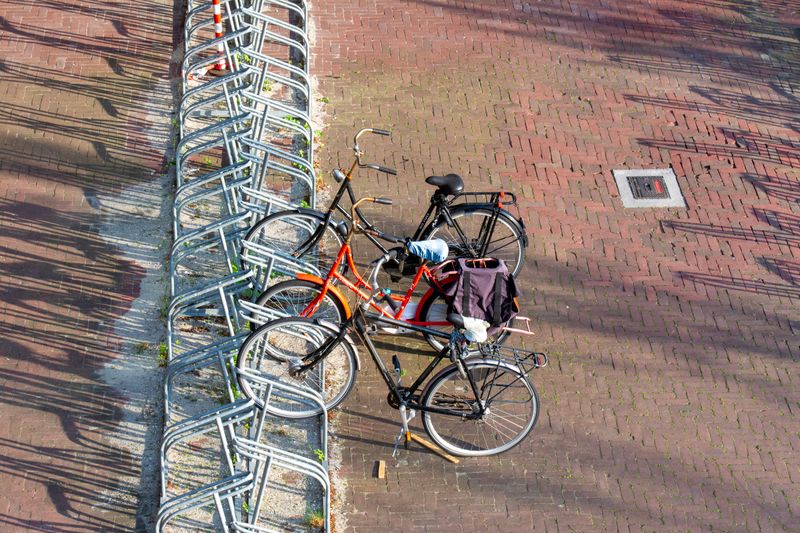
A stand should support the frame at two points so the bike stands upright and can be locked by frame and wheel together. Stands that hold only a wheel allow the bike to fall, damage the wheel and permit the frame to be unbolted and taken.
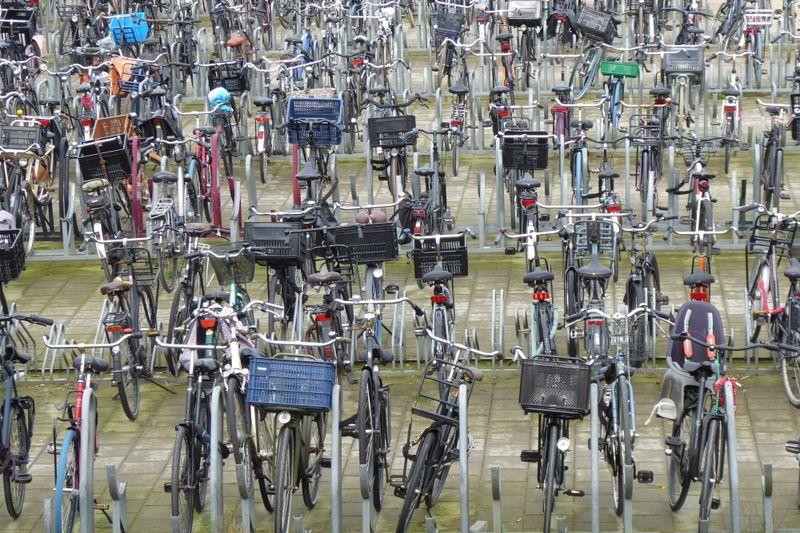
Spacing matters, since stands packed too closely cannot actually be used at full capacity without bikes tangling. Cover keeps bikes dry, which extends component life and makes the return journey less unpleasant. Overlooked locations with passing footfall deter theft better than hidden compounds nobody watches.
Secure parking and its trade-offs
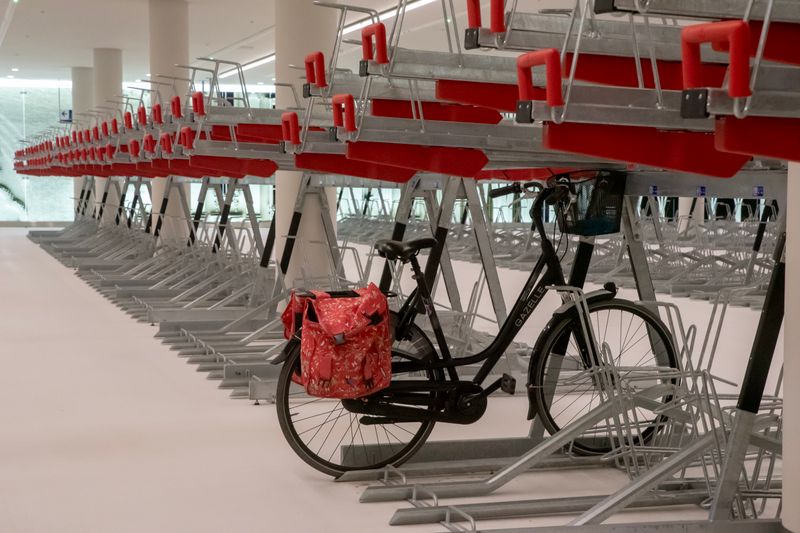
Access-controlled compounds and lockers offer much better security and are more expensive per space. They also require someone to manage access, which is why they appear at stations and workplaces rather than on streets. Registration schemes for such facilities can be a barrier for occasional users, who then park on the street anyway.
The best systems mix high-security spaces for long stays with plentiful basic stands for short ones.
Short-stay parking outside shops is what makes cycling viable for errands rather than only for commuting.
Home storage, the invisible constraint
Many people live in flats with no ground-floor storage, and carrying a bike up stairs regularly is enough to stop most people cycling. On-street cycle hangars, which replace a car parking space with secure storage for several bikes, have spread in some cities for this reason. Waiting lists for them are frequently long, which itself indicates unmet demand rather than lack of interest.
Building regulations in some countries now require cycle storage in new residential developments, with varying quality of implementation. A household that cannot store bikes conveniently will own fewer of them and use them less.
Anything structural — forks, steerer, brake mounts — is worth having a mechanic sign off.
Workplaces and what to ask for
Employers often provide parking without providing anything to lock to, or place stands where nobody feels comfortable leaving a bike. Asking for specific improvements, with a count of colleagues who would use them, is more effective than a general request. Showers and drying space matter for longer commutes and are frequently cheaper than the car parking already provided.
Some countries offer tax incentives or schemes that reduce the cost of bikes or facilities for employers. The business case is usually straightforward, since a cycle parking space costs a fraction of a car space.
The takeaway
Fix the two ends of the journey, or the middle will not be used.
Most of riding well is being boring and predictable to everyone else on the road.
Questions readers ask
What makes a good bike stand?
One that supports the frame at two points so the bike stands up and can be locked through frame and wheel. Stands holding only a wheel allow damage and let the frame be removed.
Why does home storage matter so much?
Because a bike that is awkward to retrieve gets used less. Carrying a bike up stairs or moving three others to reach it is enough friction to end the habit.