The Commute
Dress for the Ride You Will Be Having in Twenty Minutes
The most common commuting mistake is dressing for the temperature at the front door. Your body produces a great deal of heat once you start pedalling.
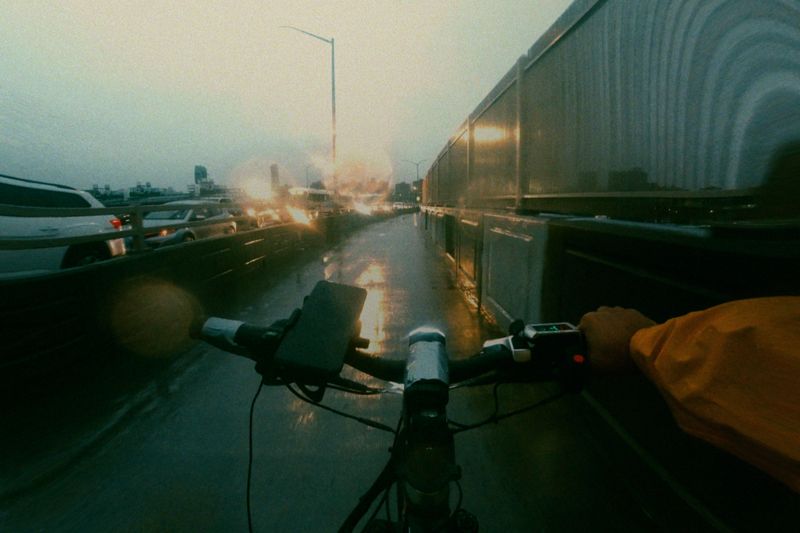
Most explanations of cycling clothing stop at the point where it starts to matter. This one carries on.
The short version
- Riders generate heat within a few minutes of setting off.
- Extremities cool faster than the torso because of airflow and blood flow.
- Being slightly cold at the start is usually correct.
Why the doorstep is a bad thermometer
Standing still, your body is producing roughly the heat of a low-wattage bulb, and cycling can raise that output several times over. That heat takes a few minutes to build and then continues for the whole ride, so the temperature you feel changes completely. Moving air across you also increases heat loss sharply, which is why the same air feels colder at speed than standing.
The two effects work against each other, and the balance point for most riders arrives around five to ten minutes in. Dressing to feel comfortable on the doorstep therefore almost guarantees overheating shortly afterwards.
The slightly-cold rule
Experienced commuters generally aim to feel a little cool for the first few minutes, on the basis that the deficit closes itself. How much cooler depends on the effort involved, so a hilly ride needs less clothing than a flat gentle one at the same temperature.
It also depends on the length of the trip, because a five-minute ride never reaches the steady state a half-hour ride does. Riders who arrive sweating in cold weather then get cold quickly when they stop, which is the failure mode worth avoiding. The rule is a starting point to calibrate against your own route rather than a universal formula.
Layers and what each one does
The layer against your skin should move moisture away from it, which is why cotton performs badly once it is wet. A middle layer traps air for insulation, and its thickness is the main variable you adjust with the season. An outer layer blocks wind and rain, and blocking wind is the larger effect for most riders in most conditions.
With a loaded rack, separating those functions lets you remove one layer rather than choosing between too hot and too cold. A layer you can open at the neck or underarms gives fine control without stopping, which is worth more than an extra garment.
Extremities go first
Hands and feet are far from the core, have a high surface area for their volume, and sit directly in the airflow. The body also restricts blood flow to them in cold conditions to protect core temperature, which makes them colder still.
That is why riders in adequate torso clothing still finish with painful fingers, and why gloves matter disproportionately. Wind on the fingers is the main mechanism, so windproof gloves often outperform thicker but more porous ones.
The same logic applies to feet, where overshoes or windproof covers do more than another pair of socks inside a tight shoe.
Rain changes the calculation
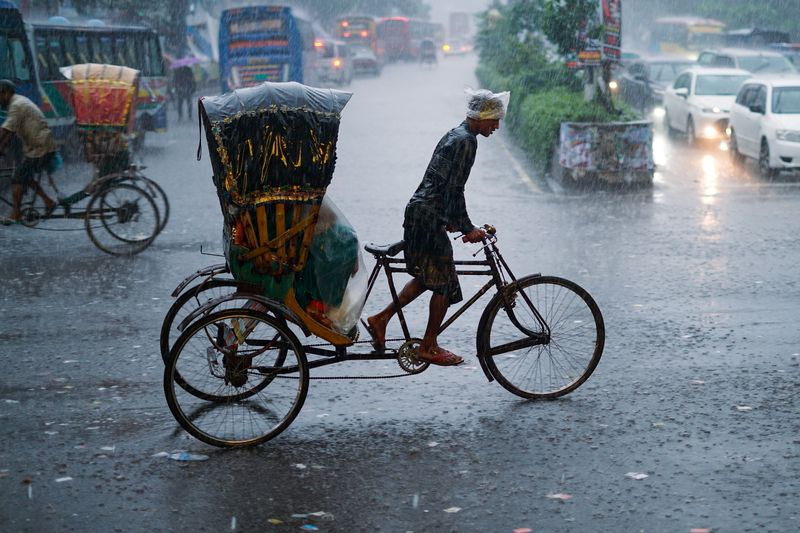
Wet clothing conducts heat away from you far faster than dry clothing, so a mild wet day can be colder in effect than a dry cold one. Keeping the wind off wet skin matters more than staying completely dry, which is rarely achievable while working hard.
In the saddle, waterproof extremities are worth prioritising, since cold wet hands affect braking and gear changes directly. Carrying a dry layer to change into on arrival is often more practical than trying to stay dry throughout. Mudguards remove most of the road spray, which is a bigger part of getting wet than the rain itself.
Road law for cycles and e-scooters is local, and enforcement is more local still.
Building a working wardrobe
Two or three thin layers cover a wider temperature range than one thick one and pack down small enough to carry. Choose a wind-blocking outer that vents, because a garment you cannot open forces you to stop and remove it. Visibility should be built into the outer layer rather than added as an afterthought, since it is the layer worn in the worst conditions.
By the second week of riding, keep a spare pair of gloves and socks at your destination, which turns a soaked ride into a minor inconvenience. None of this requires specialist cycling clothing, and for short commutes ordinary clothes with a windproof jacket work perfectly well.
The takeaway
Dress for ten minutes into the ride, and give your hands and feet more attention than your chest.
Fix the small rattle. Every large repair began as one.
Questions readers ask
How cold should I feel when I set off?
Slightly cool, on a ride long enough to warm up. On a very short trip you may never reach that steady state, so dress closer to the standing temperature.
Why are my hands always cold when the rest of me is fine?
Extremities lose heat fast and the body reduces blood flow to them to protect the core. Windproof gloves usually help more than thicker ones.
Also by Sarita Fernandes
- Hub Motors and Mid-Drives Do Genuinely Different JobsScooters & E-Mobility
- Regenerative Braking Gives Back Less Than People ExpectScooters & E-Mobility
- Nominal Watts, Peak Watts and What the Controller DecidesScooters & E-Mobility
- Rain, Puddles and Where Water Gets Into an Electric BikeScooters & E-Mobility