The Commute
Arriving Presentable Without a Shower at the Other End
Most commutes are short enough that sweat is manageable. What decides the outcome is pace, airflow and what you do in the first five minutes after stopping.
Everything below about commuting without showering comes from what actually happens rather than from what is supposed to.
What holds up in practice
- Sweating continues for several minutes after you stop riding.
- Riding slower produces far less heat than riding hard.
- Odour comes largely from bacteria acting on sweat over time.
What your body is doing after you stop
Heat produced during exercise takes time to dissipate, so core temperature stays elevated for several minutes after the effort ends. Sweating continues through that period, which is why riders who change immediately on arrival find themselves damp again shortly afterwards. Standing in a warm office in cycling clothes traps that heat and prolongs the process considerably.
The practical fix is to spend a few minutes cooling before changing, ideally somewhere with moving air. Wheeling the bike the last few hundred metres achieves the same thing and is easier to arrange than a cool room.
Pace is the main control
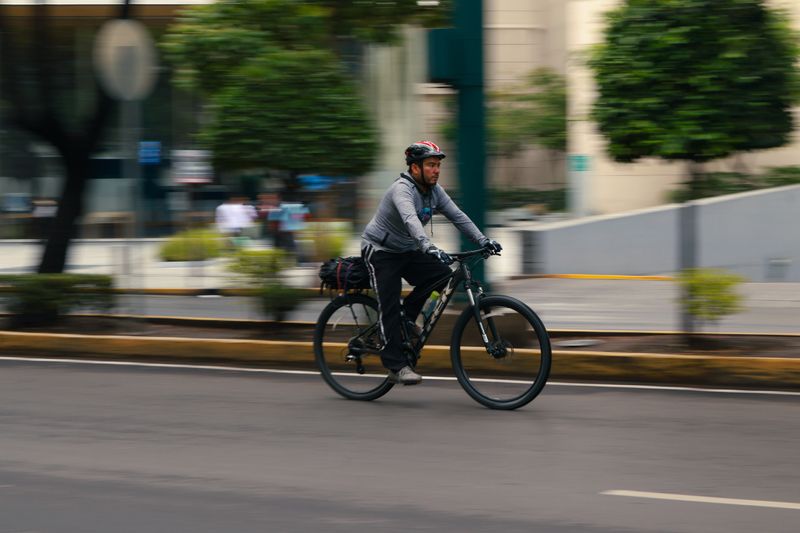
Heat production rises steeply with effort, so riding at a conversational pace produces dramatically less sweat than pushing hard. A commute is one of the few rides where arriving slightly later is entirely acceptable, which makes pace the cheapest available adjustment.
Gearing matters here too, since a bike geared so that hills force maximum effort guarantees a sweaty arrival. Riders who add electric assistance almost always report the change in arrival condition before the change in speed. If your route has one hard climb, riding the rest gently does not compensate, so consider routing around it.
Airflow beats fabric
Evaporation is what cools you, and evaporation needs air moving across skin rather than trapped against it. That is why a loaded rucksack undoes a great deal of careful clothing choice by blocking the largest sweating area. Loose, open clothing on the torso works better than tight technical fabric for a slow commute in ordinary clothes.
With a loaded rack, unzipping and rolling sleeves before you start rather than when you are already hot keeps you ahead of the problem. In hot weather, a lighter-coloured outer layer reduces radiant heat gain noticeably on a sunny route.
Where the smell comes from
Fresh sweat is largely water and salts and has very little odour of its own. Odour develops as skin bacteria metabolise components of sweat, particularly from the apocrine glands in the armpits and groin. That process takes time, which is why a short ride followed by a change of shirt usually produces no problem at all.
It also means damp clothing left in a bag all day is the main source of the smell people associate with cycling to work.
Hanging cycling clothes to dry rather than leaving them balled up solves most of it.
A workable arrival routine
Arrive with a few minutes spare, cool down before changing, wipe down with a flannel or wipes, then change into dry clothes. Keep a small kit at work containing a towel, deodorant, a spare shirt and whatever else you need to feel normal. Ride in clothes you do not mind being damp and carry the ones you need to look tidy in, rather than the other way round.
Come the wet months, shoes take longest to dry, which is the strongest argument for keeping a pair at your desk. The whole routine takes about five minutes once it is habitual and removes the largest objection people raise to commuting by bike.
Range and charging figures are quoted under conditions nobody commutes in.
When you genuinely need facilities
Long commutes, hot climates and hilly routes can exceed what any routine can absorb, and pretending otherwise is unhelpful. In that case, showers at the destination are the enabling facility, and it is a reasonable thing to ask an employer about.
Nearby gyms, pools and leisure centres often sell shower-only access, which some riders use as a workaround. Splitting the journey, riding partway and taking public transport for the rest, reduces the effort without abandoning the bike. Electric assistance is the other option, and for hot-climate commuting it changes the problem more than any clothing does.
The takeaway
Ride slower than you think you should, cool down before you change, and hang the damp clothes up.
The bike you ride daily beats the better bike you keep indoors.
Questions readers ask
Why do I keep sweating after I arrive?
Your core temperature stays raised for several minutes after the effort stops. Cool down before changing rather than immediately afterwards, ideally somewhere with moving air.
Do I need special cycling clothing for a short commute?
Usually not. Pace, airflow and a rack instead of a rucksack matter more, and ordinary loose clothing with a windproof layer works for most short rides.