Safety & Rules
The Door Zone Is the Most Predictable Danger on the Road
A parked car is stationary, visible and entirely harmless until a door opens. Riders can see this hazard coming, which is exactly why position matters so much.
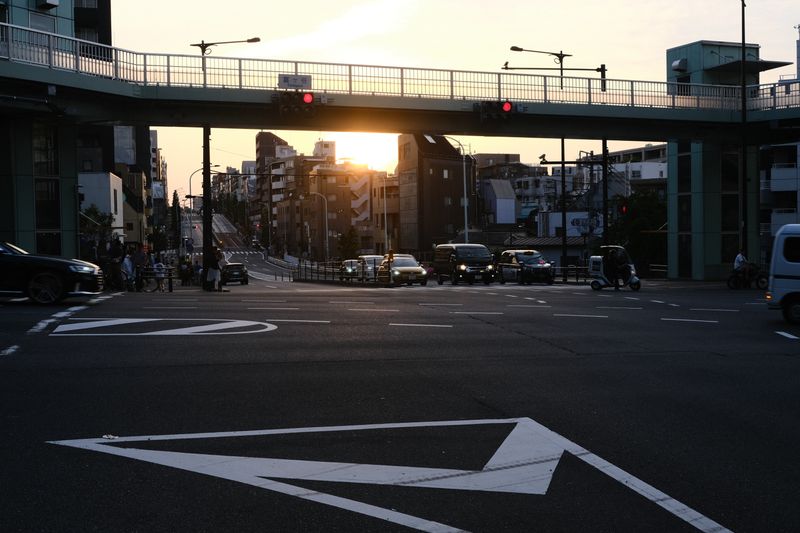
Everything below about car door hazard comes from what actually happens rather than from what is supposed to.
What holds up in practice
- A car door can extend roughly a metre into the carriageway.
- The safe line is outside that reach, not just clear of the mirrors.
- You cannot brake or swerve in the time a door takes to open.
Why doors are so dangerous
A door opens in well under a second, which is faster than a rider travelling at any normal speed can perceive, decide and act. Braking distance at typical urban cycling speed exceeds the distance you have available once the door starts moving. Swerving is worse, because it moves you into the traffic lane without warning and often at the moment a vehicle is passing.
The door itself is a hard edge at chest and head height for a seated rider, so impact injuries can be severe. Riders struck by doors are also frequently thrown sideways into moving traffic, which is where the worst outcomes come from.
Where the zone actually is
A fully opened car door extends roughly a metre from the side of the vehicle, and larger vehicles somewhat more. The safe line is therefore outside the reach of an open door, not merely clear of the parked car's mirrors.
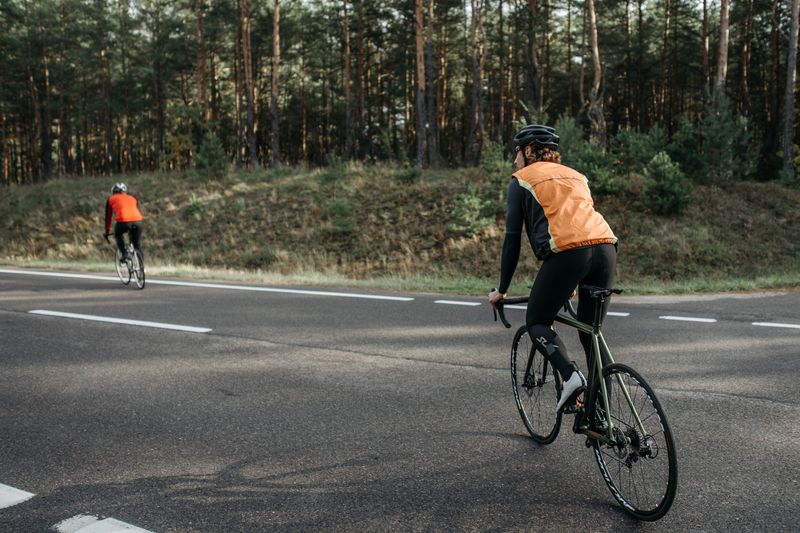
That usually places a rider close to the middle of the nearside traffic lane, which is a deliberate and defensible position. Riding immediately alongside parked cars, which feels polite, places you exactly where a door will land. Position early, well before the parked cars begin, so following drivers see the movement as intentional.
Painted lanes that make it worse
Many cities have painted cycle lanes running directly alongside parking bays, placing riders squarely in the door zone. The paint gives an impression of a designated safe space that the geometry does not support. Where the rules allow, riding outside such a lane is often safer than following it, though the legal position varies by country.
Mid-traffic, some jurisdictions require the use of marked lanes, so check what applies where you ride before making it a habit. Where a lane is mandatory and badly placed, ride at the outer edge of it and reduce speed past parked vehicles.
Reading the parked cars
Look through rear windows for occupied headrests, which is the single most useful cue that a door might open. Brake lights, exhaust vapour, wheels turned outwards and interior lights all indicate a vehicle recently arrived or about to leave. A car that has just parked is the highest-risk one on the row, so give it extra clearance and cover the brakes.
Delivery vehicles and taxis open doors frequently and often on the traffic side, which deserves particular caution.
None of this replaces position, since a driver in a blind spot can still open a door you did not anticipate.
What to do when you cannot get out
Sometimes traffic makes moving out impossible, and in that case the correct response is to reduce speed substantially. Slower speed shortens your stopping distance and reduces impact energy, which is the only variable left under your control.
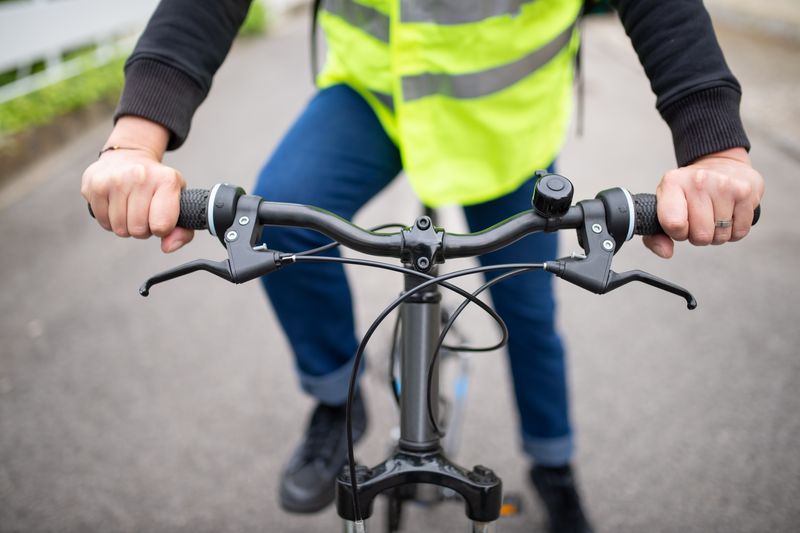
Mid-traffic, riding at a speed where you could stop for a door is slow, and on a congested street it costs very little time. Covering the brakes, rather than resting your hands elsewhere, removes reaction time from the equation. If the gap is genuinely too narrow to be safe at any speed, waiting behind a vehicle is a legitimate choice.
Road law for cycles and e-scooters is local, and enforcement is more local still.
The other side of it
Drivers and passengers can reduce this risk almost entirely by looking properly before opening a door. A technique promoted in several countries involves opening the door with the hand furthest from it, which turns the body and forces a look backwards.
Some jurisdictions have specific offences for opening a door carelessly, and others handle it under general provisions. As a rider you cannot rely on any of this, but it is worth knowing and worth mentioning to people who drive. Passengers in the back seat are frequently the ones who open without looking, and they are rarely thinking about cyclists.
The takeaway
Ride outside the reach of an open door, or slow to a speed where a door is something you can stop for.
Most of riding well is being boring and predictable to everyone else on the road.
Questions readers ask
How far from parked cars should I ride?
Far enough that a fully opened door could not reach you, which is roughly a metre from the side of the vehicle and often more for larger cars.
What if a painted cycle lane runs through the door zone?
Where local rules permit, riding outside it is often safer. Where the lane is mandatory, use its outer edge and reduce speed past parked vehicles. Check the rules for your own country.