Safety & Rules
Being Seen Is Not the Same as Being Noticed
Drivers regularly look directly at a cyclist and pull out anyway. The failure is usually in attention and expectation rather than in whether enough light reached their eyes.
Most explanations of conspicuity stop at the point where it starts to matter. This one carries on.
The short version
- Looked-but-failed-to-see collisions involve a driver who did look.
- Drivers scan for the things they expect to find.
- Position and movement attract attention better than brightness alone.
The failure that keeps happening
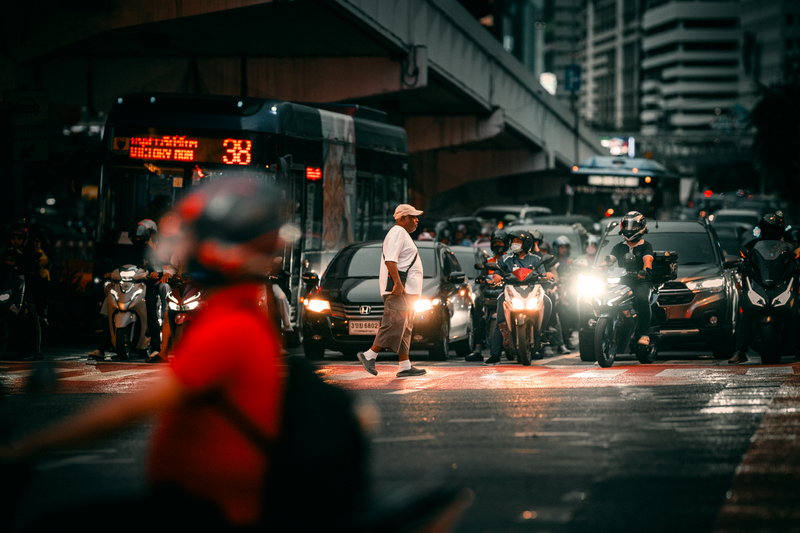
Collision investigators in several countries repeatedly identify a category where a driver looked in the correct direction and did not register the cyclist. The drivers involved are usually not lying, since they genuinely have no memory of seeing anything.
Human visual attention is selective, and the brain filters an enormous amount of what reaches the eye before it becomes conscious. What gets through is heavily influenced by what the observer is searching for at that moment. A driver looking for a gap in car-shaped traffic may not process a much smaller, differently shaped object in that gap.
Expectation shapes what is seen
Drivers in places with few cyclists are searching for cars, and their scanning pattern reflects years of that experience. This is one proposed explanation for the finding that cycling tends to become safer per rider as more people cycle. It also explains why unusual approaches, such as a rider arriving fast from an unexpected direction, produce so many incidents.
Being where a driver expects to find a vehicle is therefore a genuine safety strategy rather than merely an assertive one. That is the practical argument behind road positioning advice in cycle training across many countries.
What actually attracts attention
Movement across the visual field is detected far more readily than a static shape, which is why pedal movement matters. Reflective material on ankles and feet moves in a distinctive circular pattern that human vision picks out as human.
With a loaded rack, that is why reflective trouser clips and shoe strips are disproportionately effective for their size and cost. Contrast against the background matters more than colour, so a bright jacket against a bright shopfront may disappear. A light that flashes attracts attention, though a steady light makes distance and speed easier to judge, which is why many riders use both.
Making eye contact and its limits
Riders are often advised to make eye contact with a waiting driver, and it does help confirm mutual awareness. The limitation is that a driver can look at you, appear to meet your gaze, and still not have processed you as a hazard. Behaviour is more informative than gaze, so watch the vehicle's front wheels for the first sign of movement.
Mid-traffic, a creeping vehicle at a side road is preparing to emerge regardless of where the driver's face is pointing.
Plan on the assumption you have not been seen until the vehicle's behaviour confirms otherwise.
High-visibility clothing in context
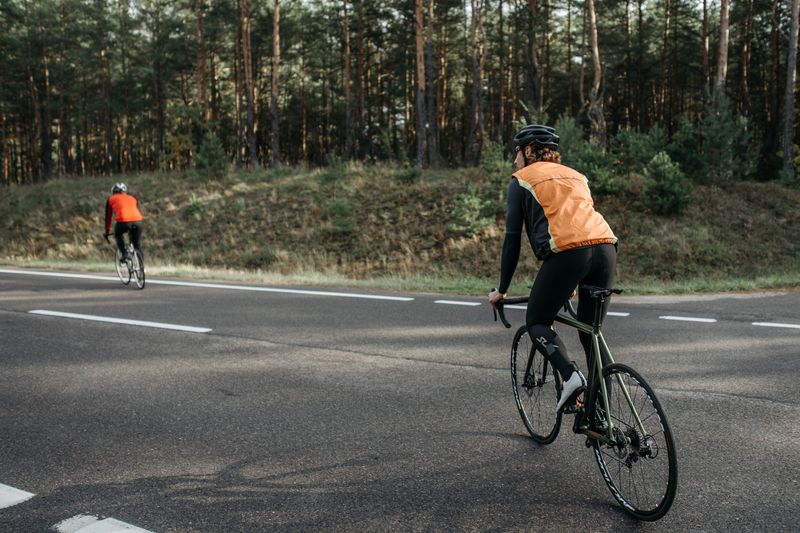
Bright and reflective clothing is helpful and is not a substitute for position, lights and anticipation. Research on its effectiveness is mixed, partly because riders who wear it differ in other ways from those who do not. It works best in conditions where contrast against the background is strong, which is not every condition.
Come the wet months, it should never be treated as a requirement placed on riders in exchange for being treated carefully. Wear what makes you easier to pick out, and do not assume it changes what a distracted driver will do.
Riding as though invisible
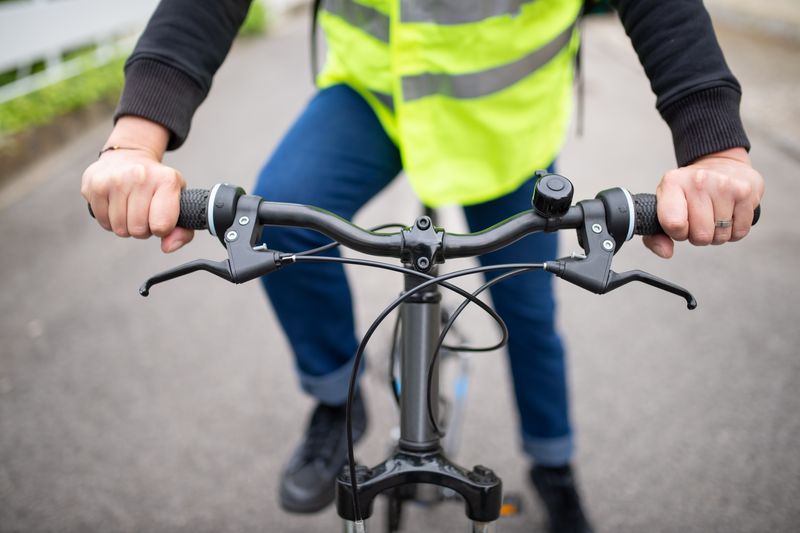
The most robust strategy is to assume you have not been seen and to ride so that being unseen is survivable. That means covering the brakes near side roads, holding a position with escape space, and not accelerating into gaps.
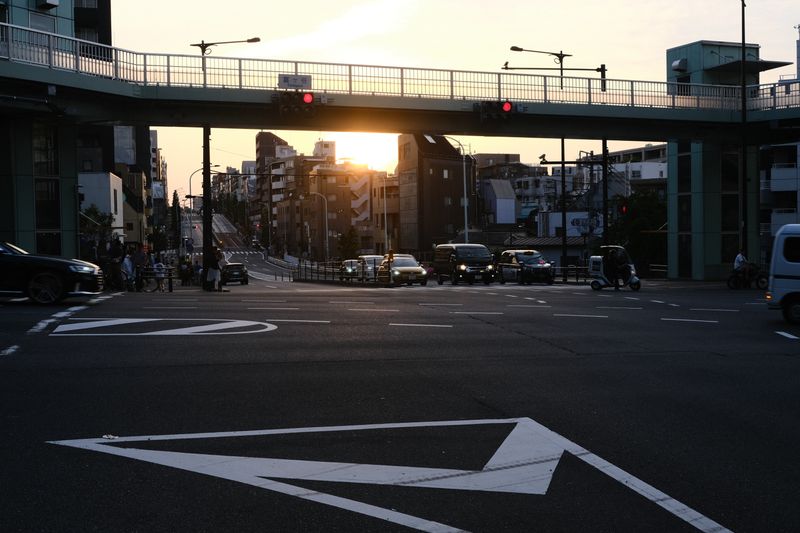
It also means avoiding places where you cannot be seen at all, such as alongside a large vehicle at a junction. Approaching every junction ready to stop costs very little time across a commute. This is not pessimism; it is simply allocating your attention to the small number of situations that produce most collisions.
The takeaway
Assume you have not been seen, and ride so that being unseen is something you survive.
Fix the small rattle. Every large repair began as one.
Questions readers ask
Does high-visibility clothing prevent collisions?
It can help you be picked out, but evidence is mixed and it does not address the attention failures behind many junction collisions. Treat it as one layer, not as protection.
Is a flashing light better than a steady one?
Flashing attracts attention more readily; steady makes your distance and speed easier to judge. Many riders run one of each, and local rules on flashing lights differ, so check yours.