Safety & Rules
Riding in a Group Without Becoming Unpredictable
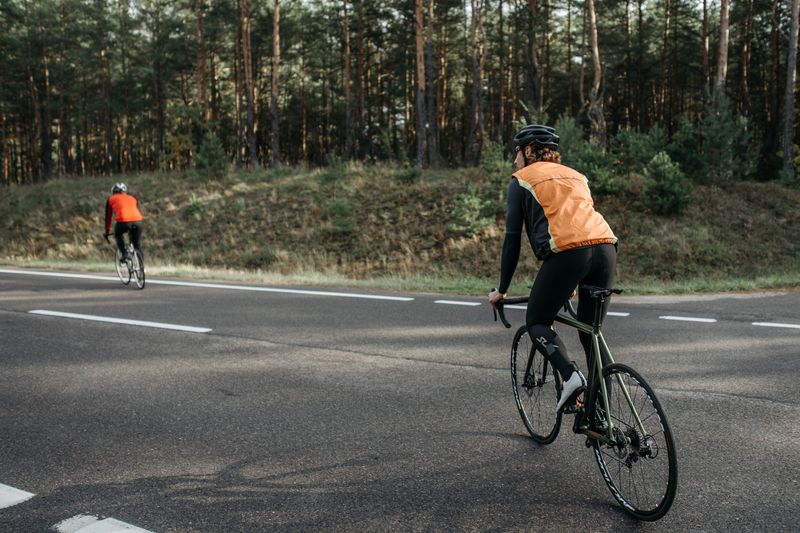
Two riders together are safer than two riders separately in some ways and more confusing to drivers in others. The difference is entirely in how the group behaves.
What follows is an argument about group riding, and about where the received version of it stops being true.
The argument in brief
- A compact group is easier to overtake than a strung-out line.
- Rules on riding two abreast vary between countries.
- Calling and pointing hazards prevents the pile-ups groups cause.
What a group changes
A group is more conspicuous than a single rider, which helps at junctions and on rural roads. It is also longer, and a long strung-out line is harder for a driver to overtake in one movement.
That is the origin of the advice to ride compactly, since a shorter group requires a shorter overtaking manoeuvre. Groups also generate their own hazards, because riders following closely cannot see the road surface ahead of them. So the safety gain depends entirely on the group behaving as a coordinated unit rather than a crowd.
Two abreast and what the rules say
Riding two abreast makes a group half as long and, on many roads, easier for a driver to pass safely in one go. It is explicitly permitted in some countries, restricted in others, and prohibited on certain road types in others still. Even where permitted, moving to single file where the road narrows or sightlines are poor is normal courtesy and good sense.
Doing so promptly and visibly, rather than after a driver becomes impatient, keeps the interaction calm. Check what applies where you ride, because this is one of the most jurisdiction-specific rules in cycling.
Communication within the group
Riders behind cannot see potholes, drain covers, gravel or parked cars, so the front riders must indicate them. Pointing at a hazard with a hand, or calling it clearly, gives following riders time to move rather than react. Calls from the back about approaching vehicles are equally important, since the front riders cannot see behind.
Agree simple signals before setting off if the group has not ridden together, as conventions differ between clubs and countries. Silence in a group is not calm, it is usually a sign that nobody is passing on information.
Holding a predictable line
Sudden movements are far more dangerous in a group because a rider behind has no time and nowhere to go. Avoid braking sharply, and slow by easing off pedalling or sitting up rather than grabbing the levers. Do not overlap your front wheel with the rear wheel of the rider ahead, since any lateral movement then removes your front wheel.
Look through and past the rider in front rather than staring at their wheel, which gives you information rather than fixation.
Ride at a steady effort rather than surging, because inconsistent pace ripples backwards and amplifies through the group.
Junctions and staying together
Groups frequently split at signals, and the riders left behind then rush to catch up, which is when incidents happen. Agree in advance to regroup after junctions rather than expecting everyone to make the same signal phase. Never wave a following vehicle through or signal that a road is clear on someone else's behalf, since you are accepting responsibility for their judgement.
Each rider makes their own decision at a junction, however slow that makes the group. On a commute this matters most where friends ride together informally without any of these conventions established.
Frames, sizes and riding positions vary enormously; borrow before you buy wherever you can.
Riding with less experienced people
Put the least confident rider where they are sheltered and visible, usually second in line rather than at the back. Announce what is coming further in advance than you would need for yourself, including gear changes before hills.
Choose routes for the least confident rider rather than the group average, since one uncomfortable rider makes the whole ride worse. Slow down before you think you need to, because inexperienced riders brake later and less effectively than they expect. The same principles apply to riding with children, where an adult behind and slightly outside gives protection and a clear view.
The takeaway
Compact, steady, and loud about hazards — that is the whole of safe group riding.
The bike you ride daily beats the better bike you keep indoors.
Questions readers ask
Is riding two abreast allowed?
It depends on the country and sometimes the road type. Where permitted, it shortens the group and makes overtaking easier, but check your local rules before assuming.
Why should I not overlap wheels?
If the rider ahead moves sideways even slightly, they take your front wheel out from under you. Staying behind rather than beside their rear wheel leaves you room to react.