Maintenance
Five Tools That Fix Most Roadside Failures
A workshop's worth of equipment stays at home. What matters on the road is a short list that covers the failures actually likely to strand you.
What follows is the working version of roadside repair kit: the decisions in the order you actually meet them, with the reasoning attached.
Before you start
- Punctures account for the large majority of roadside stops.
- A multi-tool with the right sizes beats a larger one with the wrong ones.
- Practise a repair at home before needing it in the dark.
What actually goes wrong away from home
Punctures dominate roadside failures by a wide margin, and everything else is comparatively rare. After that come loose bolts, a dropped or jammed chain, a bent derailleur hanger and a broken spoke.
Brake and gear cables snap occasionally, almost always at the shifter or lever where the strands are repeatedly flexed. Genuine mechanical failures such as a broken frame or a destroyed bearing are rare and generally not repairable on a pavement. So a sensible kit targets punctures thoroughly and everything else lightly.
The puncture kit that works
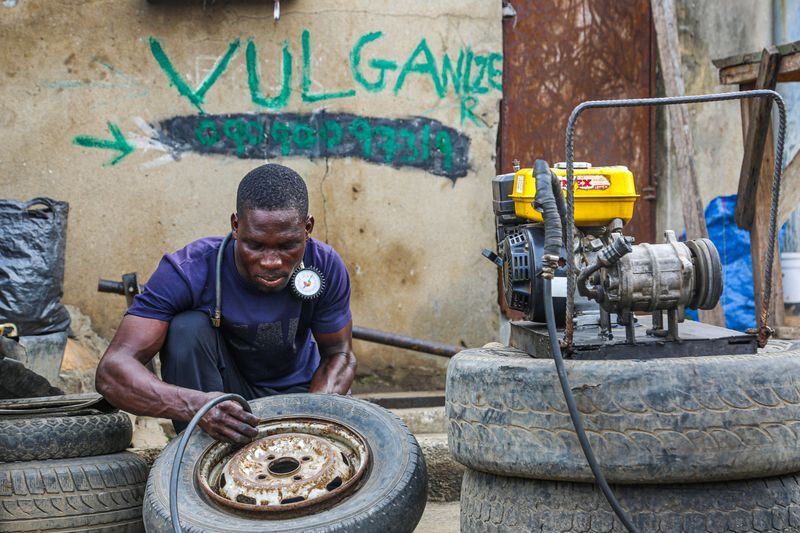
Carry a spare tube of the correct size and valve type, since fitting a tube is far quicker and more reliable than patching in the rain. Add two tyre levers, because one is rarely enough and three are rarely necessary.
A patch kit weighs almost nothing and covers the second puncture, which is exactly when you have already used the tube. A pump that fits your valve type and that you have actually used is essential, and a mini pump you cannot reach pressure with is worthless. Compressed air cartridges are fast and finite, which makes them a supplement to a pump rather than a replacement.
The multi-tool
Check which hex sizes your bike actually uses and confirm the tool has them, since a tool missing one size is useless for that bolt. A screwdriver head covers derailleur limit screws and many accessory fittings.
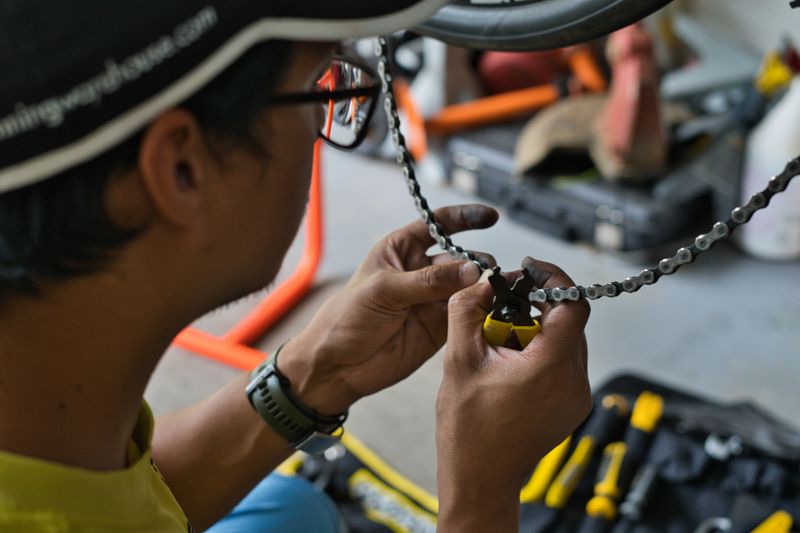
Mid-traffic, torx keys appear on rotor bolts and some stems, and are frequently absent from cheaper tools. A chain tool is worth carrying if your rides are long or remote, and a quick link of the correct speed weighs nothing. Handle length matters, because a tiny tool cannot generate enough leverage for a crank bolt or a stubborn pedal.
The things that are not tools
A short length of strong tape wrapped around the pump handle fixes torn tyre sidewalls and secures rattling parts. A folded banknote or a tyre boot placed inside a cut tyre stops the tube bulging through a hole. Zip ties fix a broken rack mount, a dangling cable or a mudguard stay well enough to ride home.
In the saddle, a spare quick link and a spare gear cable together cover the two failures most likely to leave you with no drivetrain.
Disposable gloves keep chain grease off your hands, which matters when you are on the way to work.
Practising before you need it
The first time you change a tube should not be at night in the rain with a train to catch. Do it once at home with the wheel in the frame, since removing a rear wheel with a chain and derailleur is the fiddly part. Learn how your particular wheel retention works, whether quick release, bolted or a through axle needing a specific tool.
Check that your pump reaches a usable pressure on your tyres, because some mini pumps struggle badly with high-pressure narrow tyres. Repeat it once a season, since the skill fades and the parts change.
What to carry beyond tools
A phone with enough charge to call for help, and knowledge of who you would call, is the real backstop. Money and a means to pay for public transport covers the failures that cannot be fixed at the roadside.
With a loaded rack, a light is a repair tool as well as a safety item, because a puncture after dark is impossible to fix blind. Knowing where the nearest bike shops are on your commute is a two-minute exercise that pays off once. For a short urban commute, being able to walk or catch a bus is a legitimate contingency plan.
The takeaway
Cover punctures properly, everything else lightly, and practise the tube change before you need it.
Fix the small rattle. Every large repair began as one.
Questions readers ask
What is the minimum I should carry?
A spare tube, two tyre levers, a pump that fits your valves, and a multi-tool with your bike's hex sizes. That covers the large majority of roadside stops.
Do I need a chain tool?
For short urban commutes, probably not, since walking is an option. For longer or remote rides it is worth carrying along with a quick link of the correct speed.