Safety & Rules
Where a Bicycle Tyre Runs Out of Grip
Grip is not a property of a tyre; it is a property of the contact between that tyre and a specific surface. Some urban surfaces offer far less than the tarmac beside them.
Both approaches to tyre grip work. What differs is what they cost you, and the cost is what this sets out.
The difference in one place
- Painted lines and metal covers are dramatically slippery when wet.
- Braking and cornering both consume the same limited grip.
- Crossing longitudinal gaps at an angle risks trapping a wheel.
Grip is a shared budget
A tyre can only generate a limited total force at the contact patch, and that total is shared between braking, accelerating and cornering. Braking hard while leaned into a corner asks for both at once, which is why that combination causes so many low-speed falls.
The practical rule is to complete your braking before the corner and to be either braking or turning rather than both. Available grip also depends on load, which is why an unweighted rear wheel locks so easily under heavy front braking. Nothing about this changes with an expensive tyre, since the physics is about the interface rather than the brand.
The surfaces that catch people out
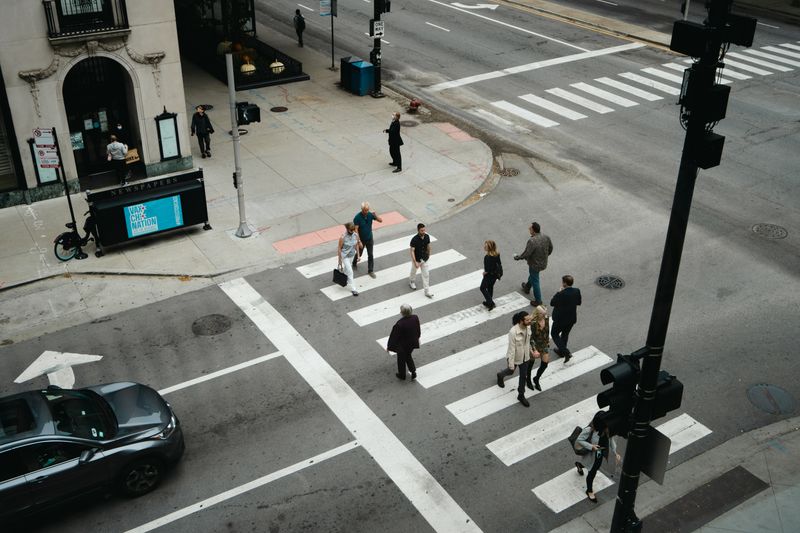
Painted road markings have a smooth sealed surface that offers markedly less friction than tarmac when wet. Metal drain covers, inspection plates and steel bridge decks are worse, particularly in the first rain after a dry spell. Tram and railway lines combine a slippery surface with a longitudinal gap, which is the most dangerous combination in urban riding.
Come the wet months, cross all of these as upright as possible, braking beforehand and neither accelerating nor turning while on them. For rails specifically, cross as close to perpendicular as the situation safely permits, which sometimes means changing your line well in advance.
Seasonal hazards
Wet leaves in autumn form a slippery mat that behaves like a lubricant and hides the surface beneath. Ice forms first on bridges and exposed sections, where the surface loses heat to the air on both sides.
Black ice is effectively invisible and is most likely at dawn after a clear cold night with earlier moisture. Loose gravel and grit accumulates at the road edge, in corners and where a side road joins. Diesel and oil spills leave visible rainbow patterns and remove grip almost entirely, particularly at junctions and bus stops.
Riding for reduced grip
Slow before hazards rather than on them, and aim to cross doubtful surfaces without any input at all. Sit slightly more upright and keep the bike vertical, since a leaning bike needs cornering force from the tyre.
With a loaded rack, loosen your grip on the bars, because a rigid grip transmits every deflection into a steering input. Increase following distance in the wet, since your braking distance is longer and so is everybody else's.
Ride in a straight line through the whole hazard rather than trying to steer around part of it.
What the tyre contributes
Rubber compound matters more than tread pattern on hard surfaces, since a smooth tyre has more rubber in contact with the road. Tread patterns matter on loose surfaces such as mud and gravel, where blocks can dig in and find grip beneath. Bicycle tyres do not aquaplane at realistic speeds, so tread designed to disperse water is largely decorative on a road tyre.
The bit that actually matters: lower pressure enlarges the contact patch and generally improves grip on rough or slippery surfaces. A tyre worn flat across the crown or hardened with age grips noticeably worse regardless of what it cost.
Winter and studded options
Studded winter tyres exist and work genuinely well on ice, using small metal pins that bite into the surface. They are heavier, slower and noisy on dry tarmac, which is the price of having grip on the days that matter. For riders in cities with regular ice, they turn several impossible weeks into ordinary riding.
Where ice is occasional, the more practical option is to accept that some mornings are not riding mornings. No tyre helps on compacted snow that has thawed and refrozen into ridges, which is genuinely difficult on two wheels.
Side by side
| Consideration | What it means in practice |
|---|---|
| Grip is a shared budget | Painted lines and metal covers are dramatically slippery when wet. |
| The surfaces that catch people out | Braking and cornering both consume the same limited grip. |
| Seasonal hazards | Crossing longitudinal gaps at an angle risks trapping a wheel. |
The takeaway
Do your braking before the slippery bit, cross it upright, and treat paint and metal as ice when it is wet.
The bike you ride daily beats the better bike you keep indoors.
Questions readers ask
Why did I fall on a painted line?
Road paint is a smooth sealed surface with much less friction than tarmac, especially when wet. Braking or turning while crossing it asks for grip that is not available.
Do knobbly tyres grip better on wet roads?
No. On hard surfaces, more rubber in contact grips better, and bicycle tyres do not aquaplane at normal speeds. Tread helps on loose surfaces like mud and gravel.