Maintenance
Chain Lubricant Matters Less Than the Cleaning You Skip
Riders debate wet against dry and wax against oil at length. The variable that dominates chain life is whether grit is removed before the lubricant goes on.
The theory of chain lubrication is well covered elsewhere. This is about the version you meet in practice.
What holds up in practice
- Lubricant applied over grit holds the grit in place.
- Wet lubricants stay put in rain and attract more dirt.
- The chain's interior needs the lubricant, not the outside.
What the lubricant is for
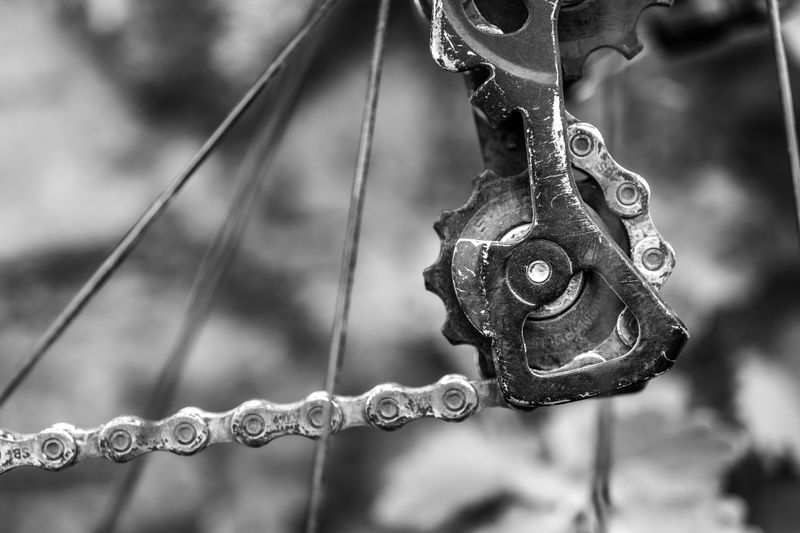
The load in a chain passes through the pin and its bearing surface, and that is the interface lubricant needs to reach. Oil on the outer plates does nothing useful and collects dirt, which is why the visible black coating on a neglected chain is pure liability. The rollers also rotate against the bushes as they engage the sprocket teeth, so they need lubrication too.
All of these are inside the chain, which means lubricant has to penetrate before it can help. That is why the correct technique is to apply, wait, and then wipe the outside thoroughly.
Why cleaning dominates
Grit trapped in a chain joint acts as an abrasive under high contact pressure, wearing pin and bush together. Adding lubricant to a dirty chain suspends that grit and carries it deeper into the joints rather than removing it.
A chain wiped down after every wet ride will outlast one that is lubricated regularly and never cleaned. The cheapest effective routine is a rag around the chain while backpedalling, which takes under a minute. Deeper cleaning with a degreaser or a chain bath is worth doing occasionally, followed by thorough drying and relubrication.
Wet, dry and what the words mean
Wet lubricants are thicker and more resistant to being washed off, which suits rain and long winter rides. Their tackiness also attracts and holds dust and grit, so they need more frequent cleaning to stay useful.
Come the wet months, dry lubricants carry the active ingredient in a solvent that evaporates, leaving a drier film that picks up less dirt. They wash off more readily in rain and need reapplying more often in wet conditions. Choosing between them is a question of your weather, not of one being better made than the other.
Waxes and the effort trade
Chain waxing, whether by immersion in melted wax or by drip-on wax emulsions, produces a very clean drivetrain that attracts little grit. Immersion waxing requires stripping a new chain of factory grease and then repeating the process periodically, which is real work. Testing by several independent groups has generally found waxed chains among the most efficient and longest lasting when maintained properly.
The catch is that the interval between treatments is shorter in wet conditions and the process is less forgiving of neglect.
It suits riders who enjoy the process and suits nobody who wants to think about a chain twice a year.
What not to use
Household oils and general-purpose penetrating sprays are too thin to stay in the joints and often contain solvents that displace lubricant. Spraying anything aerosol near a bike risks getting it onto brake rotors or rims, which is the one contamination you cannot easily undo. Excess lubricant of any type is worse than slightly too little, because the surplus sits on the outside collecting dirt.
Motor oil works mechanically but is messy, environmentally poor to wash into drains, and marks clothing badly. Whatever you use, apply it to the rollers link by link rather than pouring it over the chain.
Road law for cycles and e-scooters is local, and enforcement is more local still.
A routine that works
Wipe the chain with a dry rag after every wet ride, which removes most of the grit before it migrates inward. Relubricate when the chain looks dry or sounds dry, rather than on a fixed schedule that ignores conditions.
With a loaded rack, apply one drop per roller while backpedalling slowly, let it sit for a few minutes, then wipe the outside firmly. Degrease properly perhaps a few times a year, and always after riding in heavy salt or mud. Combine that with mudguards and a chain wear gauge and your drivetrain costs will drop noticeably.
The takeaway
Wipe first, apply inside the rollers, wipe the outside dry — the brand matters far less than that order.
The bike you ride daily beats the better bike you keep indoors.
Questions readers ask
How often should I lubricate my chain?
When it looks or sounds dry, which depends on weather and lubricant type rather than distance. Wiping it clean after wet rides matters more than the frequency of lubrication.
Is waxing worth the trouble?
It gives a very clean drivetrain and generally excellent wear, but it needs regular reapplication and careful preparation. If you would rather not think about it, a good drip lubricant with regular wiping is fine.