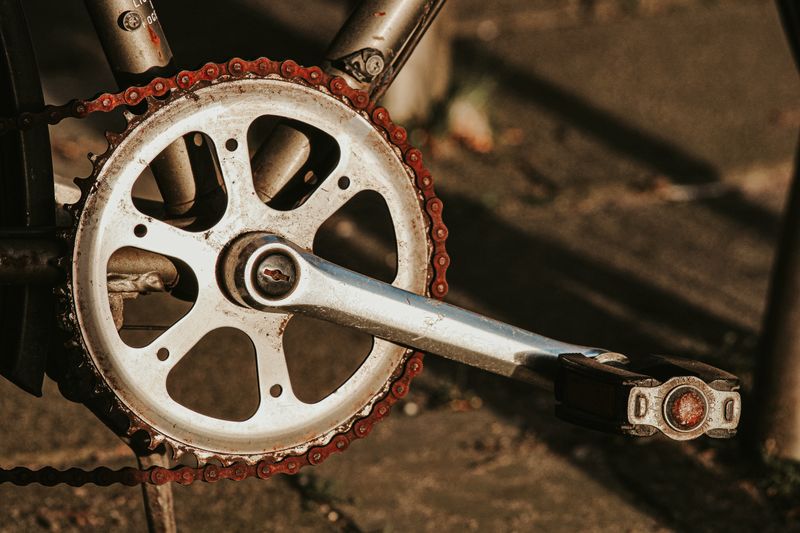
Maintenance
Why a Chain Wears the Cassette Rather Than Stretching
A worn chain is longer than a new one, but no metal has been pulled thin. Understanding what actually elongates tells you when to replace it and why waiting costs more.
There is a short answer about chain wear and a useful one, and they are not the same. What follows is the useful one.
The short version
- Elongation comes from pin and bush wear, not metal stretching.
- A worn chain reshapes sprocket teeth and then needs both replaced.
- A chain wear gauge is cheap and settles the question in seconds.
What is actually wearing
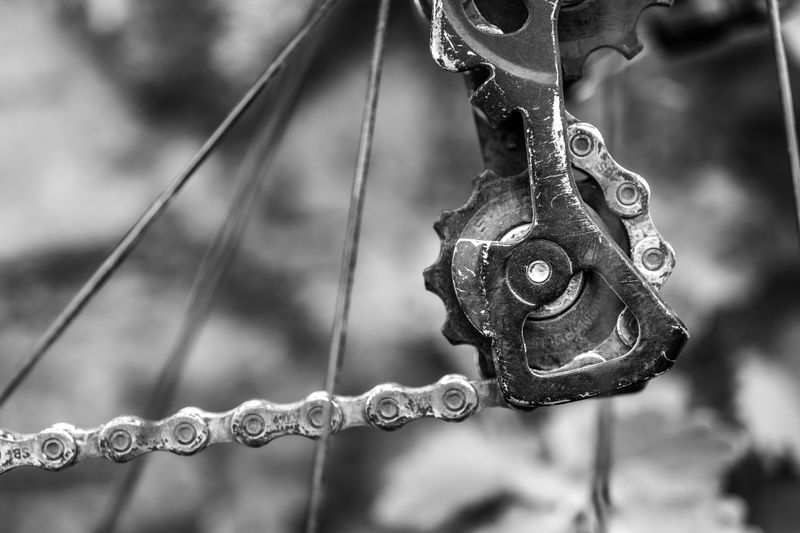
A chain is a series of rollers held between plates, with each joint made by a pin passing through a bush or the inner plate itself. Every time a link enters or leaves a sprocket, that joint articulates, and the pin rotates a fraction of a turn against its bearing surface. Grit and load wear material away from both surfaces, so the pin sits in a slightly larger hole and the joint gains a little slack.
Multiply that slack by the number of links and the chain measures longer, which is why the effect is called stretch even though nothing stretches. The side plates are under tension but are nowhere near their yield point, so they keep their original length throughout the chain's life.
Why a longer chain destroys sprockets
Sprocket teeth are spaced to match a new chain's pitch, so each roller sits in the valley between two teeth exactly as designed. As the chain elongates, the rollers no longer align with the valleys, and the load concentrates on fewer teeth than intended. Those overloaded teeth wear on their driving faces, developing the hooked profile that identifies a finished cassette or chainring.
Once teeth are reshaped to match a worn chain, a new chain will not sit properly on them and will skip under load. That skipping is the sound of a false economy, and it is why replacing a chain late costs far more than replacing it early.
Measuring wear properly
A chain wear gauge drops into the links and indicates elongation against marked thresholds, usually somewhere between half and one per cent. Modern drivetrains with many sprockets use narrower chains and generally want replacement at the lower threshold rather than the higher one.
You can measure with a steel rule instead, comparing a stated number of links against the nominal length for a new chain. Check every few hundred kilometres in winter and less often in dry conditions, since grit accelerates the process substantially. The gauge costs very little and prevents the most expensive avoidable repair in transport cycling.
What accelerates it
Grit is the main agent, because hard particles trapped between pin and bush act as an abrasive under high contact pressure. Wet riding without mudguards delivers a continuous supply of that grit directly onto the chain from the front wheel. Running a chain dry allows metal to metal contact, and running it over-lubricated attracts and holds more grit than it displaces.
Cross-chaining, where the chain runs at a severe sideways angle between extreme gear combinations, adds side loading to every joint.
High torque from a mid-drive motor increases the load at each joint, which is why e-bike chains wear faster than the same chain on a bicycle.
The maintenance that actually helps
Wiping the chain with a rag after wet rides removes the grit before it works into the joints, and takes under a minute. Lubricate after cleaning rather than before, since lubricant applied over grit simply glues it in place. Apply lubricant to the rollers, let it penetrate, then wipe the outside dry, because oil on the plates only collects dirt.
Choose a wet lubricant for wet conditions and a dry one for dusty ones, and accept that the cleaning matters more than the choice. A chain kept clean can last several times longer than an identical one ridden through a salted winter untouched.
Road law for cycles and e-scooters is local, and enforcement is more local still.
Replacement in practice
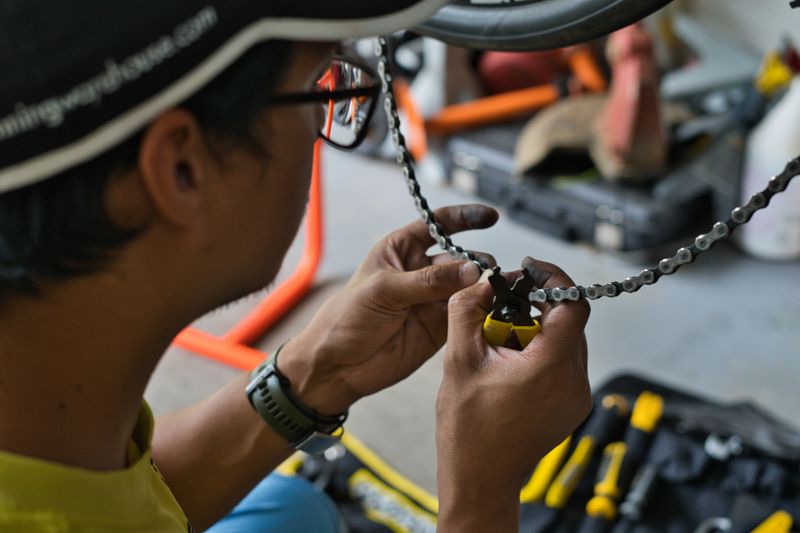
Some riders rotate two or three chains, swapping them every few hundred kilometres so all wear evenly and none reaches the threshold early. That works well and is more effort than most commuters want, so a simpler rule is to check with a gauge monthly. If the chain is past the threshold, replace it and test the drivetrain under load in the gears you use most.
If it skips, the cassette has gone too, and you may as well fit both together rather than replace the chain twice. Chainrings wear more slowly than rear sprockets because each tooth engages less often, so they often survive several chains.
The takeaway
Buy a chain gauge, check it monthly, and replace chains before they take the cassette with them.
Most of riding well is being boring and predictable to everyone else on the road.
Questions readers ask
How often should I replace my chain?
Whenever a wear gauge says it has passed the threshold for your drivetrain, which depends on conditions rather than a fixed distance. Winter riding without mudguards can halve the interval.
Can I just fit a new chain to a worn cassette?
You can try, but if the teeth are already reshaped the new chain will skip under load. At that point the cassette needs replacing too.