Maintenance
Most Worn-Out Bikes Need a Cable, a Chain and Clean Rims
A bike that shifts badly, stops poorly and feels tired is usually not worn out. It has three consumables at the end of their life and nothing structurally wrong.

Everything here earned its place by changing an outcome. Nothing about bicycle recommissioning is included to round the number up.
What matters most
- Cable friction, not shifter wear, causes most bad shifting.
- Brake performance usually returns with new pads and clean rims.
- Frames and wheels outlast several sets of consumables.
What actually degrades
The parts that wear out on a bicycle are cheap: cables, housings, chain, sprockets, brake pads, tyres, bar tape and bearings. The parts that are expensive, principally the frame, forks, wheels and shifters, generally last far longer than any of those. A bike that feels finished is therefore usually a bike whose consumables have all reached the end of their life together.
Because they degrade gradually, the rider adapts and never notices any single component becoming unacceptable. Replacing them all at once produces a transformation that riders routinely describe as a different bike.
Cables and why shifting goes vague
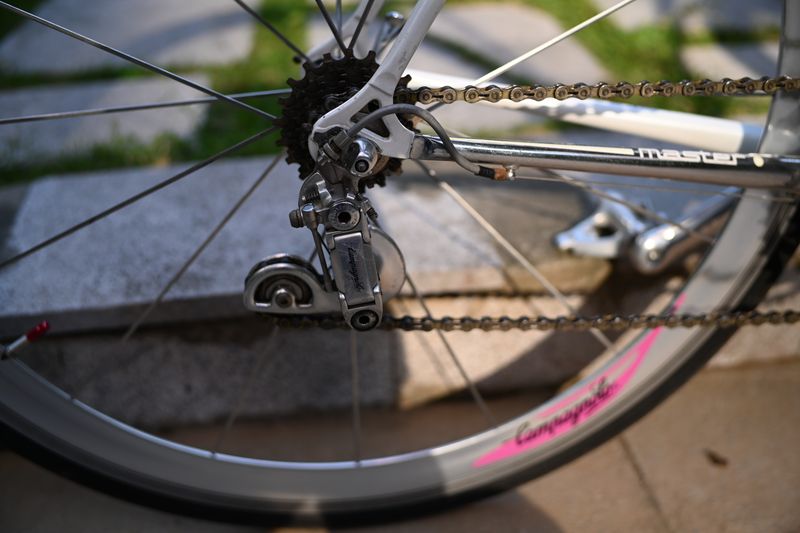
A gear cable slides inside a housing, and both accumulate dirt and corrosion that increase friction over time. Indexed shifting depends on the shifter moving the cable a precise distance, so any friction means the derailleur does not move exactly that far.
The result is hesitant shifting in one direction, since the spring returning the derailleur is weaker than your finger pulling the lever. Riders usually blame the derailleur or the shifter, and replace expensive parts that were working correctly. New inner cables and new housings, cut cleanly with the ends filed square, fix the great majority of shifting complaints.
Brakes that have quietly faded
Brake pads harden and glaze with age, and rubber that has sat for years performs noticeably worse than fresh material. Rim braking surfaces accumulate a film of aluminium oxide, brake dust and road grime that reduces friction considerably. Cleaning rims with an abrasive pad and a suitable cleaner, then fitting new pads, usually restores braking completely.
In the saddle, the brake cables suffer the same friction problem as gear cables, which shows up as a lever that does not return crisply. Check the rim wear indicator while you are there, since a worn-through rim is the one part of this that cannot be cleaned better.
The chain and what it took with it
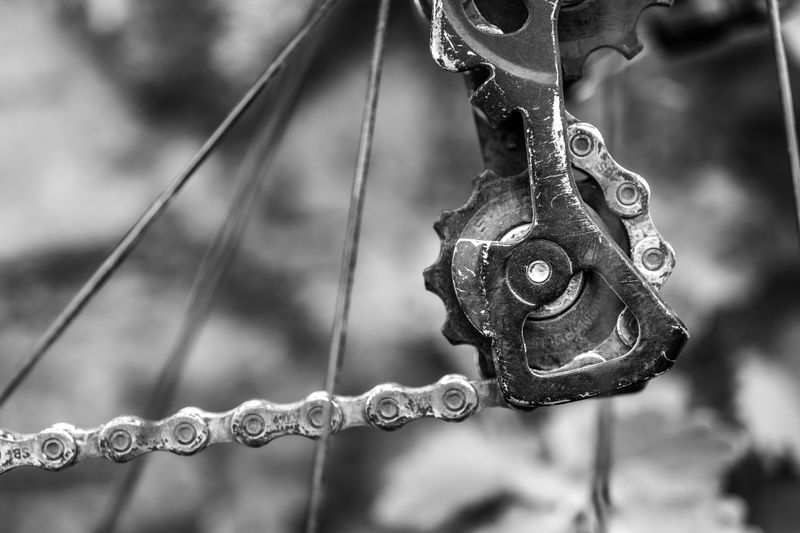
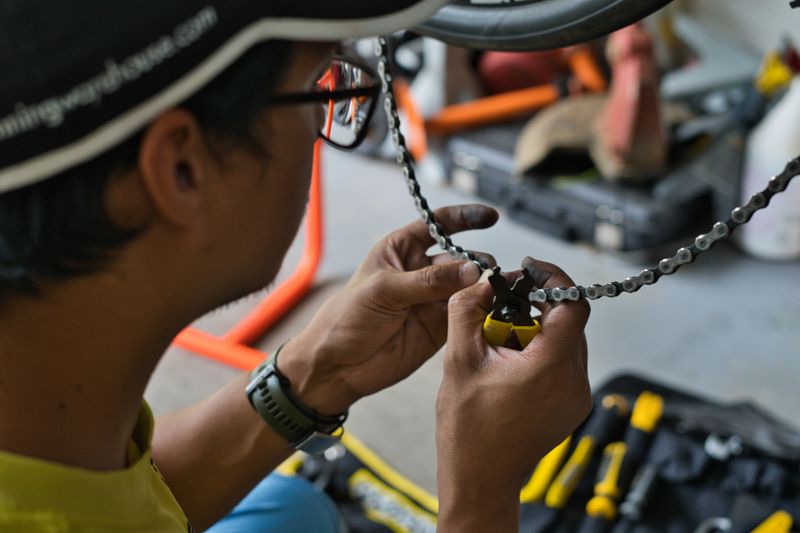
A chain ridden past its wear limit has reshaped the sprocket teeth, so a new chain alone may skip under load. Measure the chain first, because if it is only moderately worn a chain alone will do and the cassette can stay.
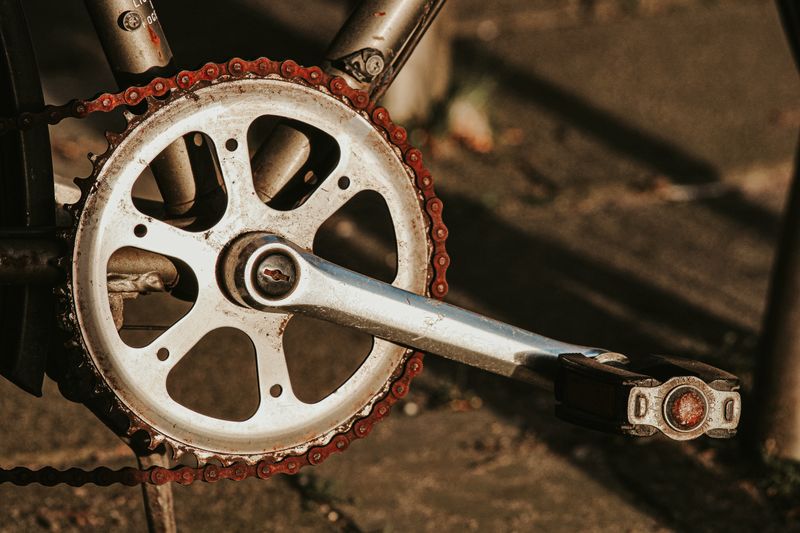
By the second week of riding, if both need replacing, do them together rather than fitting a new chain and returning a fortnight later. Chainrings usually survive several chains, so check them but do not assume they need changing. This is the most expensive part of a recommissioning and is still far cheaper than a new bike.
Bearings, tyres and the rest
Hub, headset and bottom bracket bearings often need only cleaning and regreasing rather than replacement. Tyres degrade with age as well as use, and rubber that has hardened and cracked grips poorly regardless of tread depth.
Old tubes with perished valves are a common source of slow leaks on a bike that has stood for years. Bar tape and grips are cheap and change how a bike feels out of proportion to their cost. Together these turn a neglected bike into a reliable one for a fraction of the price of replacing it.
When a bike genuinely is finished
A cracked or bent frame, a rim worn past its indicator, or a fork with any damage are all reasons to stop. A bike where obsolete parts are unavailable can be uneconomic, though adapters and substitutions cover more cases than people expect. A frame that never fitted the rider is also finished as far as that rider is concerned, regardless of condition.
Everything else is a shopping list, and a shop will quote for it if you ask specifically what it needs to be safe. Ask for the quote before deciding the bike is beyond saving, because the number is often surprisingly small.
Everything above, in order of what to do first
- What actually degrades. The parts that wear out on a bicycle are cheap: cables, housings, chain, sprockets, brake pads, tyres, bar tape and bearings.
- Cables and why shifting goes vague. A gear cable slides inside a housing, and both accumulate dirt and corrosion that increase friction over time.
- Brakes that have quietly faded. Brake pads harden and glaze with age, and rubber that has sat for years performs noticeably worse than fresh material.
- The chain and what it took with it. A chain ridden past its wear limit has reshaped the sprocket teeth, so a new chain alone may skip under load.
- Bearings, tyres and the rest. Hub, headset and bottom bracket bearings often need only cleaning and regreasing rather than replacement.
- When a bike genuinely is finished. A cracked or bent frame, a rim worn past its indicator, or a fork with any damage are all reasons to stop.
The takeaway
Before writing a bike off, price a set of cables, a chain, some pads and a pair of tyres.
Fix the small rattle. Every large repair began as one.
Questions readers ask
My gears shift badly. Do I need a new derailleur?
Rarely. Friction in old cables and housings causes most vague shifting, because the derailleur cannot return accurately against a sticky cable. New cables and housings fix the majority of cases.
Is it worth restoring an old bike?
If the frame is straight and the rims are not worn through, usually yes. Cables, chain, pads and tyres cost a fraction of a replacement bike.