The Commute
Drying Wet Kit at Work Is the Unsolved Part
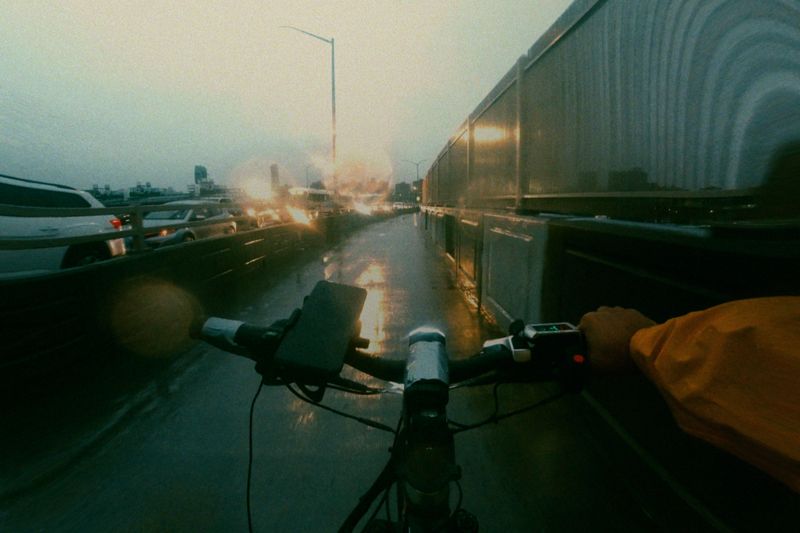
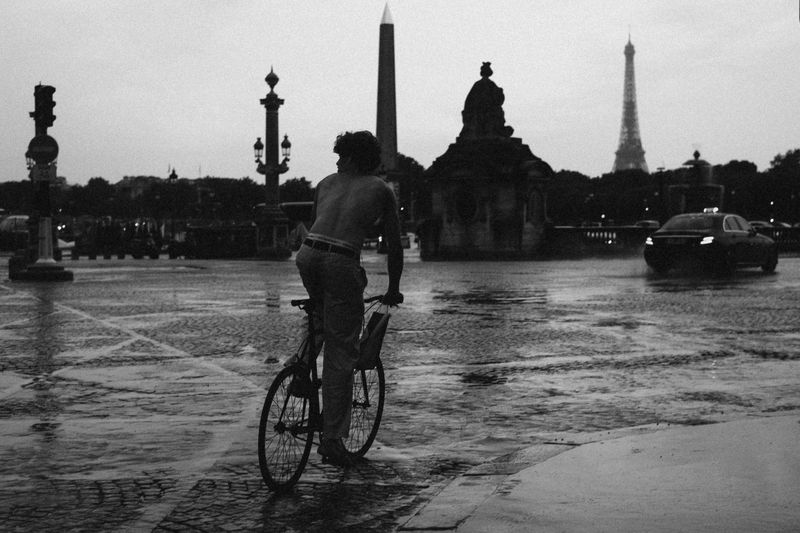
Riding through rain is manageable, but a workplace rarely offers anywhere for wet clothing to dry, which is what makes the return journey worse than the outward one.

Most advice about riding in the rain concerns staying dry on the way. The harder problem is what happens to soaked clothing during the working day.
Drying needs airflow more than heat
Water leaves fabric by evaporating, and evaporation depends on moving air and low humidity. Heat helps by lowering relative humidity, but stagnant warm air dries slowly.
A jacket folded in a bag or hung in a closed locker will still be wet hours later. The same jacket hung open in a draught may be dry before lunch.
This is why radiators are less effective than they appear. Contact heat dries the touching surface and leaves the rest of the garment saturated.
Materials differ enormously in how fast they release water
Synthetic fabrics hold water on the surface of fibres and release it quickly. Cotton absorbs into the fibre itself and stays damp for a long time.
Shoes are the worst case because they combine absorbent linings with thick soles and almost no airflow. Leather shoes soaked in the morning are rarely wearable by evening.
Choosing what gets worn in the rain on that basis is more effective than trying to keep everything dry. Something has to get wet, and it should be the item that recovers fastest.
Workplaces are built to trap moisture, not remove it
Sealed modern buildings recirculate air and control humidity centrally. Few have anywhere with strong airflow that is not also a public space.
Where drying rooms exist they are usually a legacy of a different kind of work. Most office buildings have nothing equivalent and no obvious place to improvise one.
The practical options are limited to a hook near a vent, a window that opens, or a stairwell. All are compromises and all work better than a bag.
Wet gear ruins the ride home more than the ride in
Putting on cold wet clothing before the journey home is the single most common reason people stop riding in winter. It is unpleasant in a way that riding in rain is not.
The effect is disproportionate because it is the last impression of the day. A good outward ride is easily outweighed by a bad start to the return.
Keeping one dry set specifically for the return journey solves it directly. It costs bag space and eliminates the part of wet riding people actually object to.
Managing water at the source reduces the problem
Mudguards remove the majority of the water that reaches clothing, because most of it comes off the road rather than out of the sky.
Overshoes and a long jacket tail address the two areas that soak first. Neither keeps a rider dry indefinitely, and both extend the point at which drying becomes necessary.
The aim is not staying dry through any conditions. It is arriving with a manageable amount of water in a small number of garments.
Questions readers ask
Why does a headwind feel harder than a hill?
A hill has a top and often a descent afterwards. A headwind demands elevated power continuously, and because drag rises with the square of relative air speed, the demand climbs steeply.
Do aerodynamic wheels help a commuter?
Very little at commuting speeds, and deep sections make crosswinds harder to handle. Body position and clothing fit affect your drag far more.