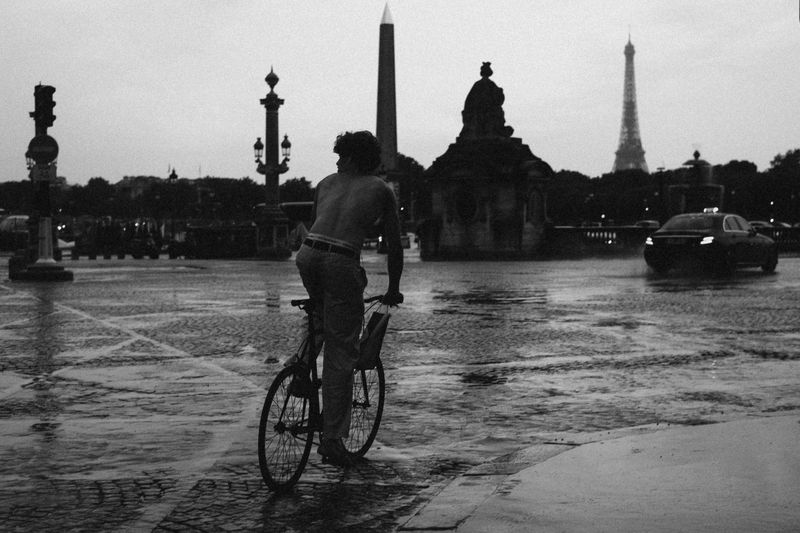
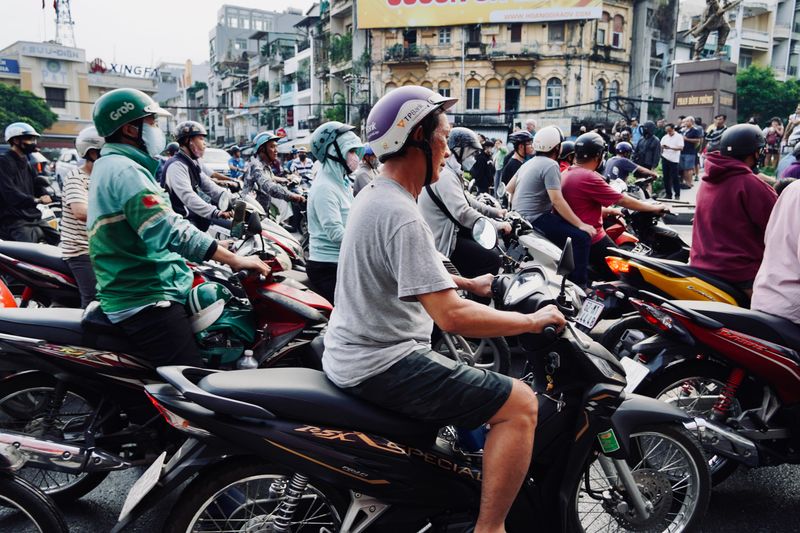
The Commute
Multi-Stop Days Are Where a Bike Beats a Car
Over one long journey a car wins easily. Over five short ones with parking in between, the arithmetic reverses and keeps reversing.
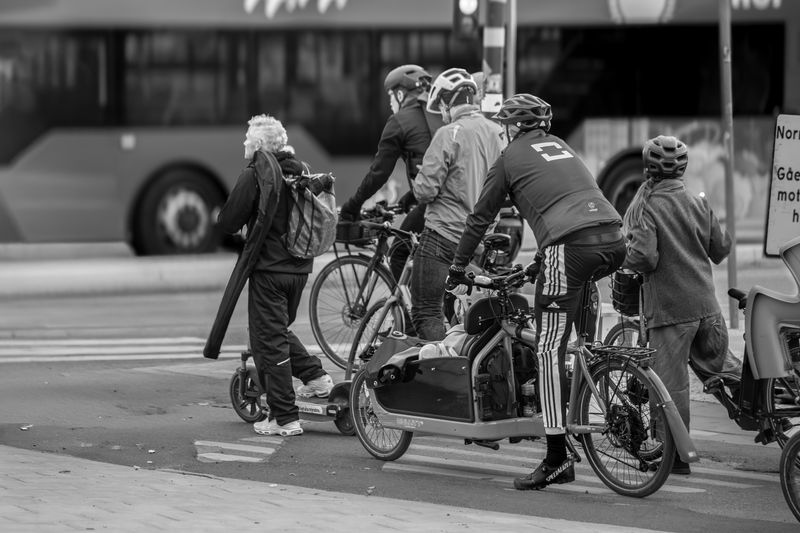
What follows is the working version of multi-stop journeys: the decisions in the order you actually meet them, with the reasoning attached.
Before you start
- Parking time is charged per stop, not per journey.
- A bicycle's door-to-door time includes almost no overhead.
- The advantage grows with density and with the number of stops.
Counting the whole journey, not the driving
A car journey is usually measured as the time spent driving, which quietly omits walking to the vehicle, parking and walking to the door. Each of those is small, and each of them is paid once per stop rather than once per day.
A bicycle journey has almost no overhead, because the machine is left within a few metres of where you are going. Over a single long trip that overhead is a small fraction of the total, and the car wins comfortably on speed. Over five short trips the overhead is paid five times, and the comparison changes completely.
Why density amplifies the effect
In a dense area destinations are close together, so the driving portion of each leg is short and the parking portion is not. Parking also becomes scarcer and more expensive exactly where destinations cluster, which lengthens the search time.
The bit that actually matters: traffic in the same areas moves at a speed that a bicycle can approach or match over short distances. The result is that the bicycle advantage is largest precisely where the most errands are available to be done. Outside dense areas the arithmetic reverses again, because distances lengthen and parking becomes free and immediate.
The predictability argument
A bicycle journey time in a city varies far less than a car journey time, because congestion affects it much less. That predictability matters more than average speed when you have appointments, since you plan around the worst case rather than the mean. A route with dedicated space away from traffic is more predictable still, which is why riders often prefer a slower but calmer line.
The bit that actually matters: weather introduces its own variability, but it is forecastable in a way that a blocked junction is not. Arriving reliably within a five minute window is a genuine practical advantage over arriving anywhere between fifteen and forty minutes.
Planning the loop
Ordering stops so that heavy and cold purchases come last keeps the machine light and manageable for most of the ride. Putting the climbs early, before anything is loaded, makes a meaningful difference on a hilly route.
By the second week of riding, grouping stops geographically rather than by priority almost always produces a shorter total distance. One-way systems shape a car loop far more than a bicycle one, which is part of why the routes differ so much between the two.
The shortest loop is rarely the best, because bike parking availability and street quality pull the route around.
Where it falls apart
Anything genuinely bulky or heavy ends the argument immediately, and no amount of clever loading fixes a wardrobe. Long gaps between stops in a spread-out area remove the density advantage that made the bicycle competitive.
Carrying passengers, other than on a machine designed for it, is a limitation rather than an inconvenience. Severe weather changes the calculation, though rather less often than people expect once they have suitable clothing. Recognising which days are bicycle days and which are not is more useful than committing to either mode absolutely.
Frames, sizes and riding positions vary enormously; borrow before you buy wherever you can.
The habit that develops
Riders who do errands by bike gradually reorganise their week into more frequent, smaller trips because the cost of a stop is so low. That produces a pattern of movement that looks inefficient on paper and is comfortably faster in practice.
It also increases the number of small local shops in the routine, simply because stopping at one is trivially easy. The change happens slowly and is usually noticed only when someone tries to go back and finds the car version tedious. None of it requires being fast, fit or committed, because the advantage comes from the stops rather than the riding.
The takeaway
Count the parking, the walking and the searching, and the short-trip comparison stops being close.
The bike you ride daily beats the better bike you keep indoors.
Questions readers ask
Is cycling actually faster than driving in a city?
Over a single long trip, usually not. Over several short trips in a dense area, frequently yes, because parking time is paid once per stop and a bicycle has almost none of it.
How do I plan a multi-stop bike route?
Group stops geographically, put the climbs early while unloaded, and collect heavy or chilled items last. Bike parking availability will pull the route around more than distance does.