The Commute
Night Shifts Ride a City Nobody Else Is Using
Riding at hours when the roads are empty changes the risks and the practicalities, replacing traffic pressure with visibility, surface and isolation problems instead.

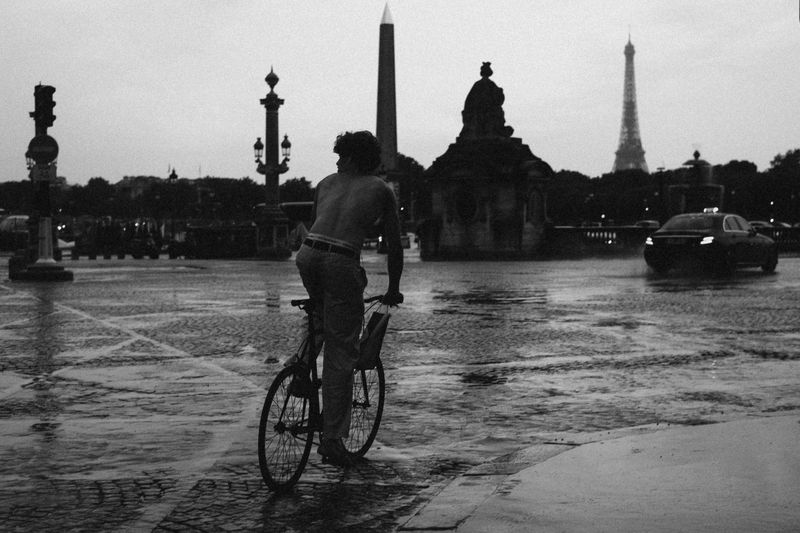
A commute at two in the morning is a different journey along the same streets. The traffic problem largely disappears and several others take its place.
Empty roads change driver behaviour rather than removing drivers
The vehicles still present at night are travelling faster, because nothing is constraining them. Speed differences between a bike and passing traffic are wider than at any other hour.
Drivers are also less prepared to encounter anyone. Expectation drives perception, and a driver who has seen no one for ten minutes is slower to register a rider.
The practical response is to position and light for being unexpected. Assuming a driver has not seen you is a reasonable default in a way it is not at rush hour.
Signals stop cooperating
Many traffic signals switch to demand-based operation overnight, responding to vehicles detected in the road. Detection loops are calibrated for metal mass and often ignore a bicycle.
A rider can therefore wait indefinitely at a light that has no reason to change. This is a common and specific frustration of night riding.
Positioning over the loop where it is visible in the road surface sometimes works. Where it does not, riders are left choosing between waiting and proceeding against the signal.
Surfaces are worse than they look under lights
Street lighting flattens the road and hides texture. Potholes, standing water and loose gravel are considerably harder to read at night than the light level suggests.
Frost forms in the small hours and is invisible on dark asphalt. Bridges, shaded stretches and painted markings ice before the surrounding road does.
A bike light bright enough to see with, rather than only to be seen by, is the meaningful difference. Below that threshold, night riding is largely done on memory of the route.
Isolation is a practical rather than emotional issue
A mechanical failure at three in the morning is a longer problem than the same failure at eight. There is no passing help and fewer options for abandoning the ride.
Public transport is thin or absent, and taxi availability varies. Carrying enough to complete a repair matters more than usual, because the fallback is walking.
Route choice shifts accordingly. Riders working nights often prefer a slightly longer road route to a shorter path with no exit points.
Fatigue affects riding before it feels like tiredness
Judgement and reaction time degrade at the end of a night shift in ways that are difficult to self-assess. Riders frequently feel alert while responding measurably slower.
The ride home is therefore the higher-risk leg, not the ride in. It coincides with dawn traffic building and with the lowest point of the body's daily cycle.
Riding that leg conservatively, on the calmest available route, is the sensible arrangement. The time saved by a faster line is small compared with the margin lost.
Questions readers ask
Why does a headwind feel harder than a hill?
A hill has a top and often a descent afterwards. A headwind demands elevated power continuously, and because drag rises with the square of relative air speed, the demand climbs steeply.
Do aerodynamic wheels help a commuter?
Very little at commuting speeds, and deep sections make crosswinds harder to handle. Body position and clothing fit affect your drag far more.