The Commute
The Ride Home Does Not Have to Follow the Ride In
Morning and evening conditions differ enough in traffic, light and urgency that the best outbound route is often the wrong one in the other direction.

Most people ride the same route twice a day in opposite directions. The two journeys happen under conditions different enough that treating them as one route is usually a mistake.
The two peaks are not mirror images
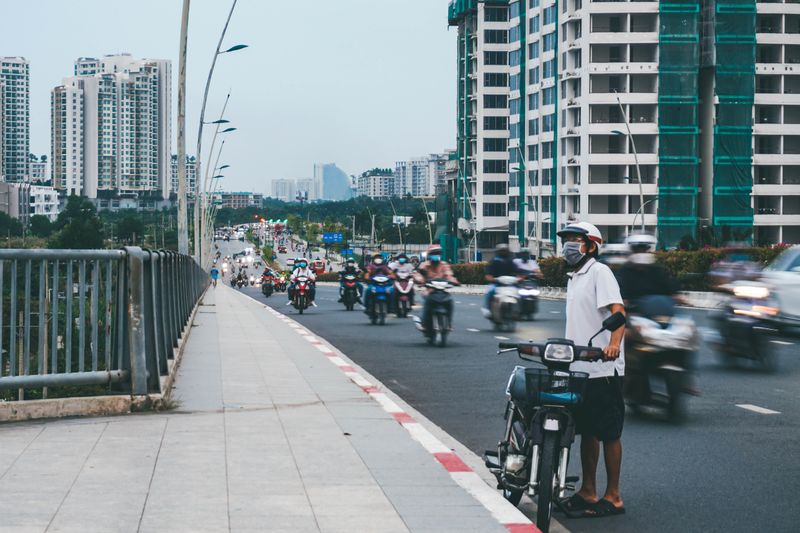
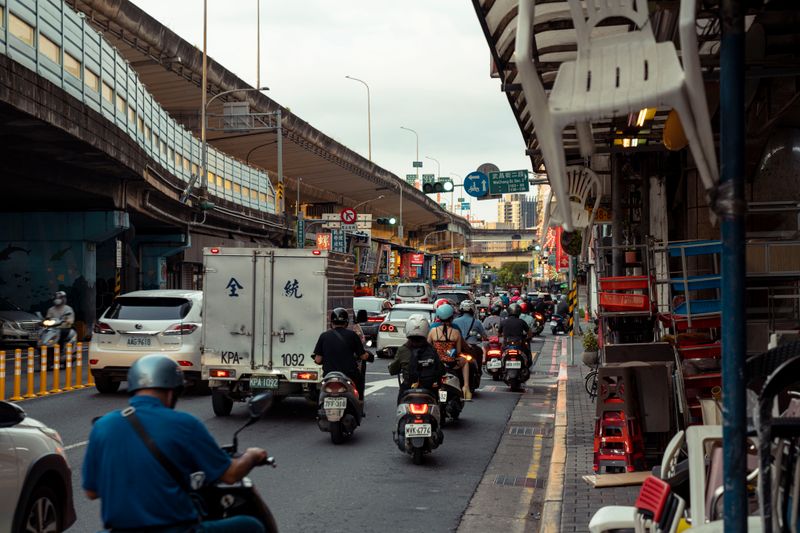
Morning traffic is compressed into a short window because arrival times are fixed. Evening traffic spreads across several hours because departures are not.
The result is a sharper, denser morning peak and a longer, looser evening one. A junction that is impassable at eight can be straightforward at six.
Direction matters too. Flows are asymmetric, and a road carrying heavy inbound traffic in the morning may be comparatively empty for the same rider going the other way.
Time pressure runs in one direction only
The morning journey has a deadline attached, and that deadline shapes every decision made during it. Riders take more direct lines and accept conditions they would otherwise avoid.
The evening trip typically has none. That removes the reason to prefer the fastest route and makes a longer, calmer one genuinely viable.
Recognising this explicitly is what makes the difference. Riders who plan one route tend to ride the urgent version twice, including when there is no urgency.
Light and visibility invert across the year
For several months, one leg of the commute is in darkness and the other is not. Which leg depends on the season and the working pattern.
A route through a park or along an unlit path may be the obvious choice in daylight and a poor one after dark. The reverse is also common, where an unlit path avoids headlight glare.
Planning a single route forces a compromise that fits neither condition. Planning two allows each to be chosen for the light it will actually be ridden in.
Gradient is a one-way problem
A route with a climb on the way in has a descent on the way home. Where arriving without sweating matters, that arrangement is backwards.
Choosing a flatter inbound route and a hillier return one solves it directly. The climb happens when there is no dress code and no deadline waiting at the top.
The same logic applies to wind, which in many places has a prevailing direction. A route sheltered from the usual headwind is worth more in the morning than in the evening.
Two routes are also two sets of local knowledge
Riding a single line every day produces detailed knowledge of one corridor and none of the alternatives. That becomes a problem the first time the corridor is closed.
Alternating routes builds a mental map with redundancy in it. Roadworks, a closed bridge or an incident then costs a minor diversion rather than an improvised guess.
It also spreads exposure. A rider who uses one hostile junction twice a day meets it far more often than one who has arranged to pass it only once.
Questions readers ask
Why does a headwind feel harder than a hill?
A hill has a top and often a descent afterwards. A headwind demands elevated power continuously, and because drag rises with the square of relative air speed, the demand climbs steeply.
Do aerodynamic wheels help a commuter?
Very little at commuting speeds, and deep sections make crosswinds harder to handle. Body position and clothing fit affect your drag far more.