The Commute
What a Bike Commute Costs Before It Saves Anything
Riding to work is usually cheaper than driving over time, but the savings arrive gradually while the setup costs and the wear on equipment arrive early.

Bike commuting is frequently described as free transportation, which is true only after a period during which it is not. The costs land early and the savings accumulate slowly.
The setup is front-loaded by design
A commuting setup usually means more than a bike. Lighting, a lock appropriate to where the bike will sit, some way of carrying a load, and rain gear all arrive before the first full week of riding.
Each item is bought once and used for years, so the per-trip cost falls sharply over time. But the outlay happens while the rider is still deciding whether the habit will stick.
That ordering explains why many attempts stall. The spending peaks at the point of least certainty.
Wear is a function of miles, weather, and storage
A commuting bike accumulates consumable wear on a schedule: chains, brake pads, tires, and cables all have finite lives measured in distance and conditions.
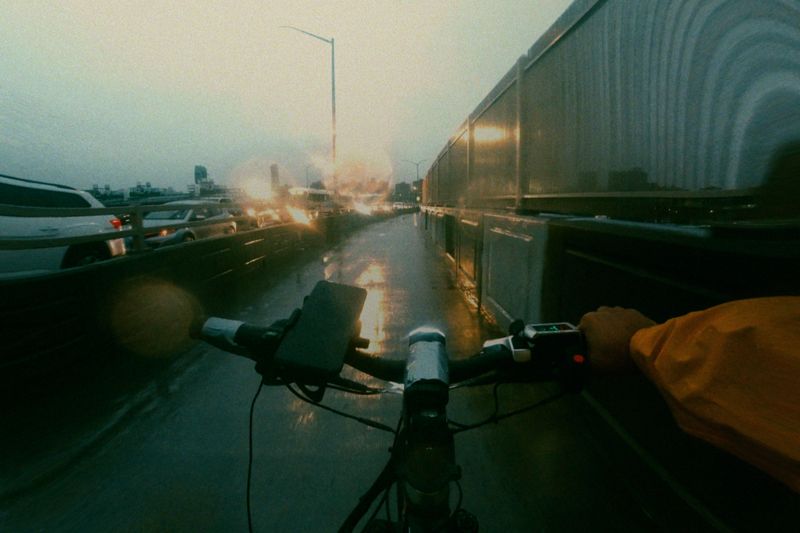
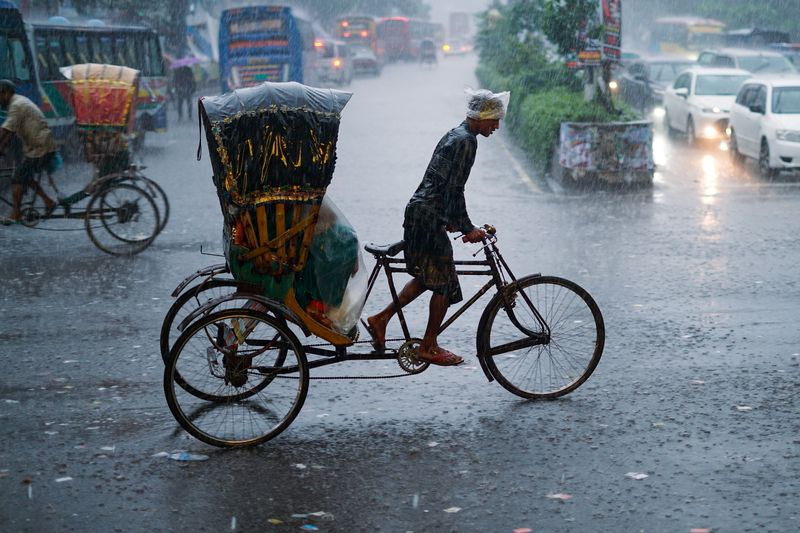
Wet and gritty riding shortens those lives considerably, because water carries abrasive road grit into the drivetrain and brake surfaces where it grinds away material.
A bike stored outdoors adds corrosion to that list, which raises maintenance cost in a way that has nothing to do with how far it was ridden.
The savings side is mostly avoided variable cost
Driving costs split into fixed costs, such as insurance and depreciation, and variable costs, such as fuel, parking, and wear.
A bike commute reliably removes variable costs from the days it replaces. It removes fixed costs only if the household actually gives up a vehicle, which is a much larger decision.
This is why savings estimates vary so widely between riders. The number depends entirely on whether a car went away or simply stayed parked.
Time has a value that cuts both ways
On congested urban trips of a few miles, a bike is often competitive on door-to-door time, especially once parking is counted at both ends.
On longer suburban trips the bike usually takes longer, and that difference is a real cost even though it never appears on a receipt.
Riders who count it honestly tend to make better route and mode choices than those who treat every ride as automatically the cheaper option.
The second-order costs are the ones people miss
Secure parking sometimes carries a fee. Transit passes still get bought for backup days. Replacing a stolen bike is an unbudgeted cost with a real probability attached to it.
Clothing wears differently too, since shoes and bags take more abrasion than they would in a car-based routine.
None of this makes riding expensive. It makes riding an ordinary purchase with a payback period, which is a more useful frame than treating it as free.
Questions readers ask
Why does a headwind feel harder than a hill?
A hill has a top and often a descent afterwards. A headwind demands elevated power continuously, and because drag rises with the square of relative air speed, the demand climbs steeply.
Do aerodynamic wheels help a commuter?
Very little at commuting speeds, and deep sections make crosswinds harder to handle. Body position and clothing fit affect your drag far more.