Riding the City
One-Way Streets and the Case for Riding Both Ways
One-way systems were designed to move motor traffic. For anyone on a bicycle they add distance, and contraflow permission has become a standard remedy.

This looks at contraflow cycling from the practical end — what holds up once conditions stop being ideal.
What holds up in practice
- One-way systems force cyclists onto longer, busier routes.
- Contraflow cycling is permitted in many countries with specific signing.
- Approaching drivers see contraflow riders head-on, which aids detection.
Why one-way streets exist
One-way working increases motor traffic capacity by removing opposing flows and simplifying junctions. It also allows wider running lanes and more parking within the same carriageway width. The cost falls on anyone whose journey does not match the imposed direction, since they must travel around.
For a driver the detour is a minor inconvenience measured in seconds of engine time. For a cyclist the same detour is measured in effort, exposure to traffic and additional junctions.
What the detour actually costs
A one-way street forces a rider onto a longer route, usually along a busier road with more junctions. Every extra junction is an additional conflict point, so the detour raises risk as well as effort.
By the second week of riding, it also makes cycling look slower and less convenient relative to driving, which affects mode choice. The effect compounds in one-way systems covering several streets, where a short trip becomes a circuit. That is why permeability, the ability to make direct journeys, is treated as a core network quality.
How contraflow works
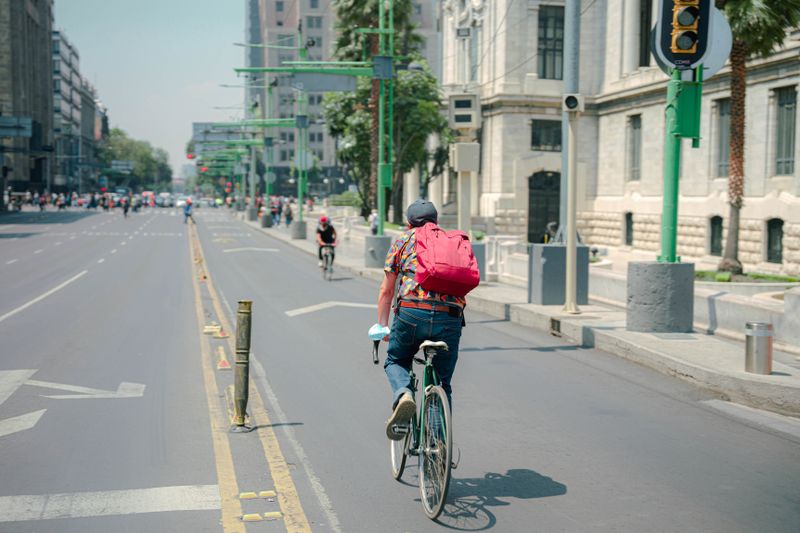
Contraflow cycling permits riders to travel against the general direction of motor traffic on a one-way street. Implementation ranges from a segregated contraflow lane to simple signing with no physical separation.
In the saddle, many countries permit it by default on low-speed, low-volume streets, with signing indicating the exception. The measure is inexpensive, since it usually needs signs and markings rather than construction. The permeability gain per pound spent is among the highest available in cycle network improvement.
Why it is safer than it sounds
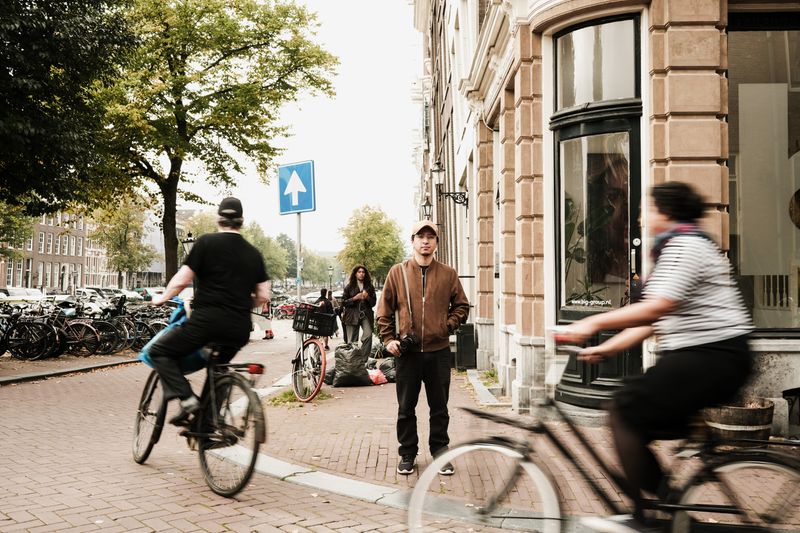
The intuitive objection is that riding against traffic must be more dangerous, and evaluations have generally not supported that. One reason is that approaching drivers and riders see each other head-on, which is the easiest detection case for both. Speeds on the streets where contraflow is permitted are usually low, which limits both frequency and severity of conflicts.
Mid-traffic, drivers on narrow one-way streets are already negotiating parked vehicles and expect to give way.
The dangerous version is riding against traffic where it is not permitted, since nobody is expecting it.
Where it goes wrong
Contraflow on a street too narrow for two vehicles to pass creates pinch points that need managing. Parking on the contraflow side removes the space entirely and is the commonest practical failure.
By the second week of riding, junctions at either end need designing, since a rider emerging from an unexpected direction can surprise turning drivers. Signing must be clear enough that drivers entering the street understand they may meet cyclists. Where these details are neglected, the scheme gets blamed rather than the implementation.
Range and charging figures are quoted under conditions nobody commutes in.
Other forms of permeability
Gaps in modal filters allow cycling and walking through where motor traffic is blocked, which shortens journeys considerably. Cycle-only links between cul-de-sacs turn a disconnected residential layout into a usable network.
Exemptions from turn bans and access restrictions serve the same purpose at junctions. Each is cheap, and collectively they can make cycling meaningfully more direct than driving in a city centre. That relative advantage is one of the strongest levers a city has, and it requires almost no construction.
The takeaway
Permeability is the cheapest advantage a city can hand cyclists, and it mostly comes down to signs.
Most of riding well is being boring and predictable to everyone else on the road.
Questions readers ask
Is riding the wrong way up a one-way street legal?
Only where a contraflow is signed as permitted, and the rules differ by country. Riding against traffic where it is not permitted places you where nobody expects you.
Why is contraflow cycling considered safe?
Approaching drivers and riders see each other head-on, which is the easiest case for detection, and it is normally applied on low-speed streets where drivers already give way around parked cars.