Riding the City
Riding a City That Was Never Designed For It
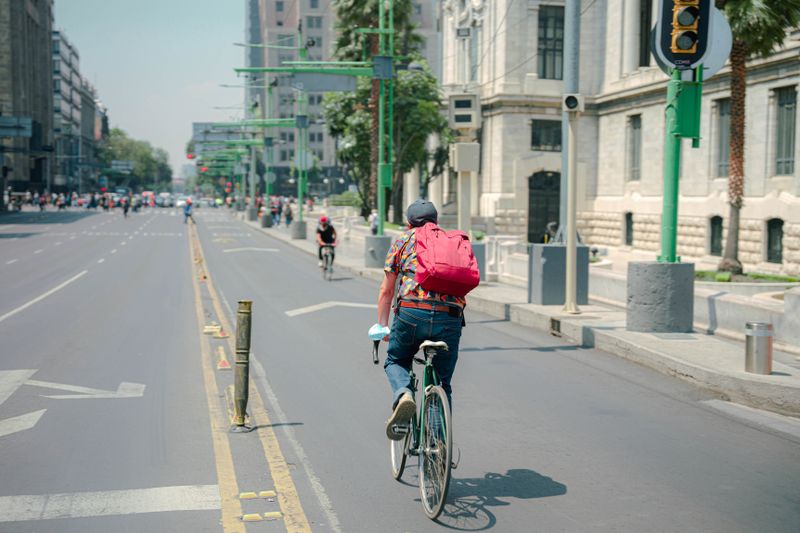
Most riders will never live somewhere with a coherent cycle network. The techniques for coping are different from the techniques for using good infrastructure.
The options around cycling without infrastructure are set out side by side below, with the conditions that genuinely favour one over the other.
The difference in one place
- Local knowledge substitutes for network design.
- Quiet parallel streets exist in almost every street grid.
- Timing a journey changes the traffic you meet more than the route does.
Building your own network
In the absence of designed routes, riders assemble personal ones from quiet streets, cut-throughs, parks and paths. That knowledge is genuinely valuable and is rarely written down anywhere, which is why local riders are the best source. Exploring on a weekend morning, when traffic is light, is the practical way to build it.
Satellite imagery is useful for spotting links between streets that mapping does not show as connected. The result is usually a route that would look eccentric on a map and works well every day.
Timing as a tool
Traffic volume varies enormously through the day, and shifting a commute by twenty minutes can transform a route. Peak flows are also directional, so the busy direction in the morning may be the quiet one in the evening.
With a loaded rack, school run times produce concentrated congestion around specific streets that is entirely predictable. Riding slightly earlier is frequently the single most effective change available to someone with a hostile route. Where a route is unavoidable, timing is the variable most riders forget they control.
Reading a street grid
Regular grids almost always contain quieter parallel streets one or two blocks from the arterial road. Streets with speed humps, restricted entries or dead ends for motor traffic are usually pleasant to ride. Bus routes, lorry routes and roads leading to major car parks concentrate the traffic you want to avoid.
The bit that actually matters: streets fronted by shops with parking are often worse than they look, because of manoeuvring and door opening. Residential streets with trees and on-street parking tend to have naturally low speeds, which is what you want.
Handling the unavoidable sections
Almost every route contains a section with no good option, usually a bridge, a junction or a stretch of arterial road. For those, position deliberately, slow down, and accept that a short unpleasant section is the cost of the journey. Walking a difficult hundred metres on a footway, where permitted, is a legitimate tactic rather than a defeat.
Some riders time these sections to arrive with a signal phase that gives them the road briefly to themselves.
Knowing exactly where the difficult part starts and ends makes it far easier to manage.
What not to do
Riding against traffic on a one-way street places you where nobody is looking and is illegal in most places without a contraflow. Riding on footways where prohibited creates conflict with pedestrians and undermines the case for better provision.
Filtering into gaps beside large vehicles at junctions is the most consistently dangerous habit riders adopt in hostile cities. Jumping signals may occasionally feel safer and reliably damages how riders as a group are regarded. None of these solve the underlying problem, and each creates new risk while doing so.
Anything structural — forks, steerer, brake mounts — is worth having a mechanic sign off.
Changing it slowly
Reporting specific defects, dangerous junctions and near misses builds a record that eventually supports change. Local cycling groups aggregate that into something councils can act on, and joining one takes an evening. Consultation responses that describe a specific location and a specific problem carry more weight than general statements.
Employers, schools and hospitals can be persuaded to improve their own access and parking, which is often quicker than public realm change. Meanwhile ride the route you have, because a city with more riders on it gets better faster than one with fewer.
Side by side
| Consideration | What it means in practice |
|---|---|
| Building your own network | Local knowledge substitutes for network design. |
| Timing as a tool | Quiet parallel streets exist in almost every street grid. |
| Reading a street grid | Timing a journey changes the traffic you meet more than the route does. |
The takeaway
Build your own network from quiet streets, control the timing, and report the junction that scares you.
Fix the small rattle. Every large repair began as one.
Questions readers ask
How do I find a good route with no cycle infrastructure?
Explore parallel residential streets at a quiet time, look for filtered or dead-end streets, and ask local riders. Satellite imagery often reveals links that road maps do not show.
Is riding on the pavement safer?
Usually not, and where prohibited it creates conflict with pedestrians and problems at every driveway and junction. Slowing down and positioning properly on the road is generally the better answer.