Riding the City
Pop-Up Lanes Showed How Fast a City Can Build
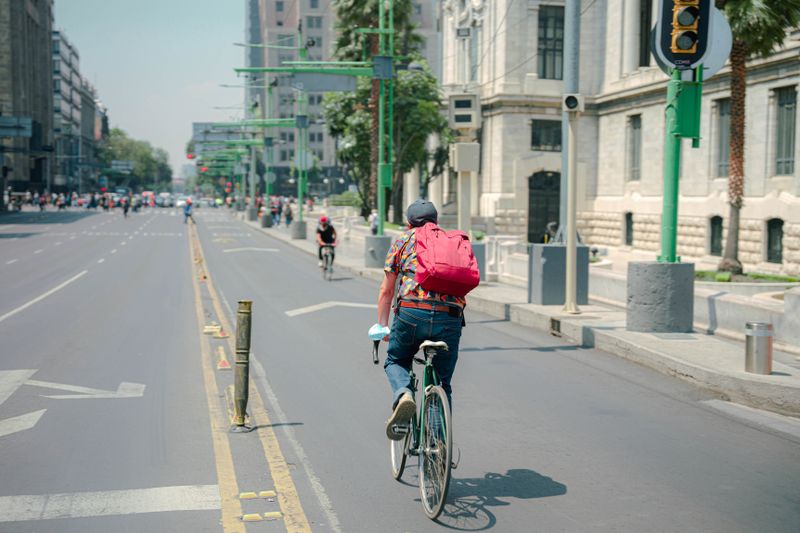
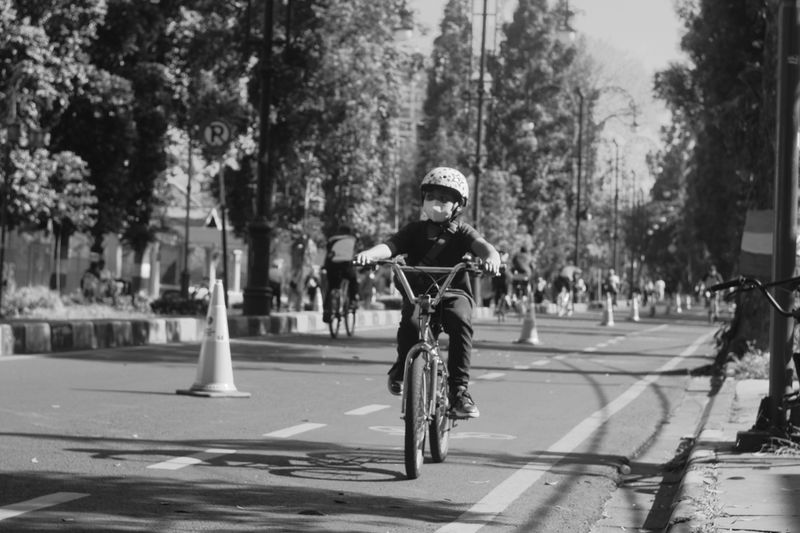
Temporary cycle lanes built with bollards and paint demonstrated that the delay in conventional schemes is procedural rather than physical, and that quick builds can be tested honestly.

A stretch of protected cycle lane normally takes years to reach the ground. A run of temporary schemes across many cities showed the same protection arriving in weeks.
Most of the delay was never construction
The physical work in a typical lane is modest: markings, signage, some form of separation and occasional kerb changes. None of it is slow by construction standards.
The years are consumed by design iterations, consultation rounds, funding cycles and legal orders. Each stage is defensible individually and the sequence is what produces the timescale.
Temporary schemes compressed this by using powers meant for roadworks and emergencies. The construction was not faster; the process preceding it was shorter.
Light separation works better than expected
Conventional protection uses concrete kerbs, which are permanent and expensive to move. Temporary schemes used plastic bollards, planters and rubber kerb segments instead.
These do not physically stop a vehicle, and they were not intended to. Their function is to make entering the lane obviously deliberate rather than an easy drift.
That turns out to be most of the benefit. The difference in rider behaviour between paint and light separation is much larger than the difference between light and heavy separation.
Reversibility changes the political argument
A permanent scheme is debated as though it were irreversible, because in practice it is. Opposition therefore concentrates before construction, when no evidence exists.
A removable scheme moves the argument after the fact. The question becomes whether to keep something that is already there and being used, which is a different question.
Several temporary lanes were removed following that debate, and many were made permanent. Either outcome was reached with real data, which is not how the conventional process works.
The rough edges were real and mostly fixable
Quick schemes produced predictable defects: drainage blocked by kerb segments, awkward transitions at junctions and bollards placed where they caught pedals.
These attracted criticism, some of it fair. They also revealed problems that would otherwise have been cast in concrete, at a stage when correcting them cost almost nothing.
Iterating on a live scheme is uncomfortable for authorities used to consulting on drawings. It is also the only way to find the errors that drawings conceal.
What the experience left behind
The lasting result is not the individual lanes but the demonstration that a shorter route to a built scheme exists. That precedent is difficult to unlearn.
It also established a middle option between doing nothing and committing to a full rebuild. A trial installation can now be proposed as a serious step rather than as a dodge.
Cities that retained the habit are building faster than their peers and correcting more mistakes. The ones that reverted are back to arguing about drawings.
Questions readers ask
Why do people ride on the road next to a cycle path?
Usually because the path is slower, gives up priority at every side road, or does not go where they are going. Directness is a real requirement, not a preference.
Why does a new cycle route sometimes seem little used?
Often because it does not yet connect to anything at either end. Network value grows as links join up, so early sections can look disappointing until the gaps close.