Riding the City
You Breathe Less Traffic on the Bike Than in the Car Behind It
A sealed cabin sitting in a queue collects what the vehicle in front is producing. Where you are in the traffic matters more than what you are travelling in.
There is a short answer about traffic pollution exposure and a useful one, and they are not the same. What follows is the useful one.
The short version
- Pollution concentrations fall sharply with distance from the traffic lane.
- Vehicle cabins draw in air from directly behind the exhaust ahead.
- Riders breathe more air per minute, which partly offsets lower concentrations.
Concentration is a local variable
Traffic pollutants are not spread evenly across a city, and their concentration falls off sharply within metres of the traffic lane. That means two people on the same street can be exposed to noticeably different air depending on where they are standing. The steepest gradient is in the first few metres, which is why a separated path set back from the carriageway matters.
Buildings on both sides of a narrow street trap air and slow dispersal, which is why enclosed streets hold concentrations longer. Open roads, wind and vegetation all help dispersal, though the details are complicated and depend on the specific arrangement.
Why a car cabin is not a shelter
A vehicle draws ventilation air from directly in front of it, which in a queue is the space immediately behind another exhaust. That places the intake in one of the highest concentration positions available on the street. The cabin then holds that air, so concentrations inside can remain elevated after the vehicle has left the queue.
Recirculation and cabin filtration reduce some pollutants and are much less effective against others, particularly gases. Studies comparing modes have generally found that drivers in congested traffic are not better off than riders on the same route.
What riders do differently
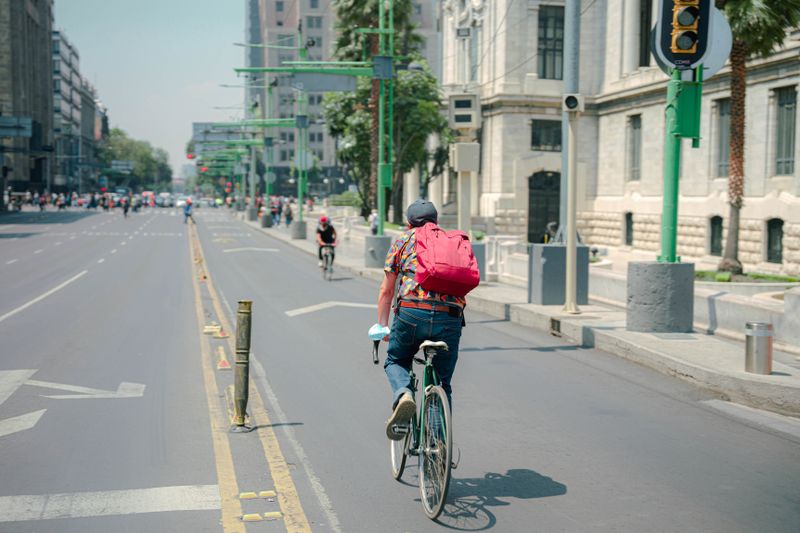
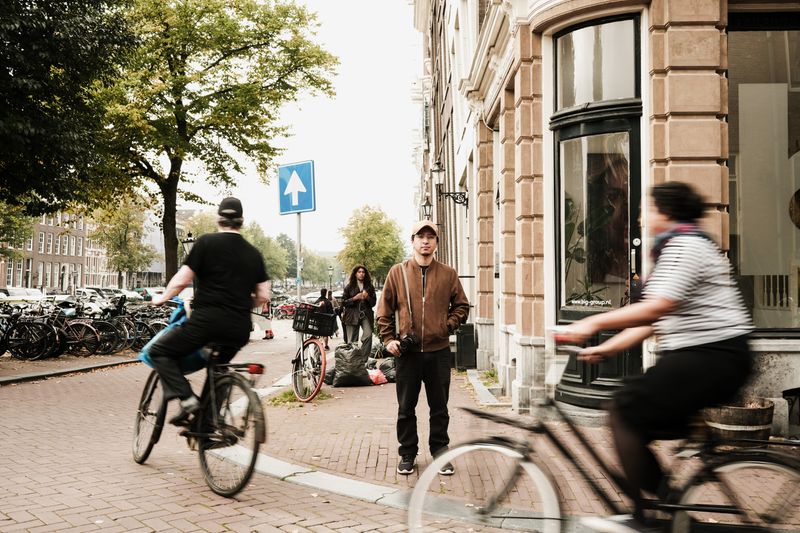
A rider is usually positioned differently in the street, and can often be further from the centre of the traffic stream. Riders can also take a parallel street, which is a change of exposure that a driver in a queue cannot make. Against that, physical effort raises breathing rate and depth, so a rider moves more air through their lungs per minute.
That partly offsets the lower concentration, which is why the comparison between modes is closer than either side usually claims. Riding at a moderate effort on a quieter street is the combination that changes both variables in the right direction.
The route choices that matter
A street one block from an arterial road frequently has substantially lower concentrations for a marginal increase in distance. Avoiding the inside of a queue at a signal, where vehicles are idling and accelerating, removes one of the worst positions on a route.
Positioning yourself ahead of stopped traffic rather than in the middle of it changes what you are breathing while waiting. Riding beside a park, water or an open aspect gives dispersal a chance that a canyon street does not.
Timing matters as well, since concentrations vary through the day with traffic volumes and with weather conditions.
Masks, filters and what is actually known
Masks marketed for urban riding vary enormously in what they filter and in how well they seal against a face. A poor seal allows air around the edges, which undermines the filter regardless of what the material is rated for.
Come the wet months, evidence on real-world benefit for riders is mixed and the studies are difficult to run, which is worth saying plainly. Particulate filtration and gaseous pollutants are different problems, and many products address only one of them. This is a genuinely contested area, and anyone with a respiratory condition should be discussing it with a clinician rather than a comparison table.
Range and charging figures are quoted under conditions nobody commutes in.
Keeping the comparison honest
Public health bodies have generally concluded that the health benefits of regular physical activity outweigh the additional exposure for most people in most cities. That is a population-level judgement and does not describe any individual, particularly anyone with an existing condition. Air quality also varies enormously between cities, and a conclusion drawn in one place may not transfer to another.
Anyone with asthma or another respiratory or cardiac condition should take individual advice rather than relying on a general statement. The most useful action available to a rider remains route choice, because it changes exposure more reliably than anything worn on the face.
The takeaway
Move one street away from the traffic and you have done more for the air you breathe than anything you could wear.
Fix the small rattle. Every large repair began as one.
Questions readers ask
Am I breathing worse air on a bike than in a car?
Usually not, because a vehicle cabin draws air from directly behind the exhaust ahead and holds it. Riders breathe more air per minute due to effort, which narrows the gap, but route choice is available to riders and not to drivers stuck in a queue.
Do pollution masks work for cycling?
The evidence is mixed and depends heavily on fit, what the filter targets and which pollutants matter locally. A poor seal undermines any filter. If you have a respiratory condition, this is a question for a clinician.