Maintenance
Dry Climates Wear a Drivetrain Differently Than Wet Ones
Grit destroys chains in both wet and dry places, but the way it arrives and stays differs enough to change which lubricant and cleaning routine actually works.

A chain in Phoenix and a chain in Seattle both wear out from abrasive particles between the moving surfaces. How those particles get there, and how long they stay, is not the same.
Wear happens inside the chain, not outside it
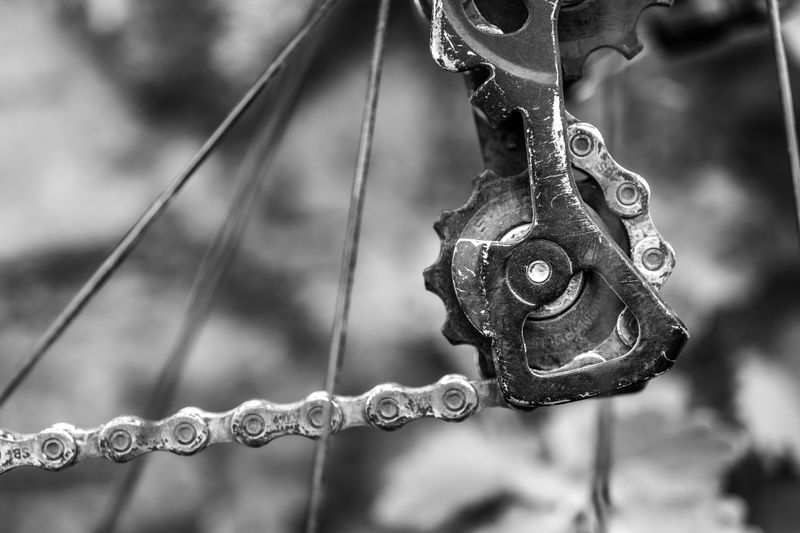
Chain wear is the enlargement of the clearance between each pin and the bushing surface it rotates against, caused by abrasion under load.
Grit that reaches that interface acts as a grinding compound, accelerating the process by a large factor compared with a clean, lubricated joint.
Everything about lubricant selection and cleaning is aimed at that one interface. What the outside of the chain looks like is nearly irrelevant.
Wet conditions deliver grit and remove lubricant
Water carries road grit onto the chain continuously and washes lubricant out of the joints, so the protective film is being stripped at the same time contamination arrives.
Wet-weather lubricants are formulated to resist that washing off, which generally means being thicker and more tenacious.
The trade is that a tacky lubricant collects and holds passing grit on the surface, so wet-climate riding demands frequent cleaning rather than just frequent lubrication.
Dry conditions bring dust that sticks to whatever is there
In dry, dusty places there is no washing action, so lubricant stays put and airborne dust accumulates on it, building a grinding paste over time.
Dry lubricants and wax-based treatments address this by leaving a drier film that dust adheres to less readily.
They offer less protection when it does rain, which is why riders in variable climates end up with different products for different seasons.
Cleaning method matters more than product choice
High-pressure water aimed at a bearing or a chain drives contamination inward past seals, which is worse than leaving the dirt where it was.
Wiping the chain thoroughly with a cloth removes the surface layer where most of the grit sits, and a relubricated chain wiped again leaves lubricant inside and little outside.
That sequence matters in both climates, because the goal in each is a clean interface rather than a clean-looking chain.
Measurement is how the decision gets made
Chain wear is measured with a gauge that reads the elongation of the roller spacing, and manufacturers publish thresholds at which replacement is recommended.
Replacing at the threshold protects the cassette and chainrings, which wear to match a stretched chain and then reject a new one.
Because wear rate depends on conditions, checking on a schedule rather than assuming a mileage figure is the only approach that transfers between climates.
Questions readers ask
My steering feels notchy in the straight-ahead position. What is that?
An indented headset bearing race, usually caused by riding with a loose headset. The notch cannot be polished out, so the bearing needs replacing, and the adjustment needs correcting afterwards.
How long should bearings last?
It depends far more on water and grit than on distance. A bike with mudguards and dry storage can go years; one ridden through salted winters without guards may need attention annually.