Maintenance
The Spare Parts Worth Owning Before Something Breaks
Tools get all the attention, and the thing that ends a ride is usually a consumable. A small box at home turns most failures into an evening job.
This works through spare parts in the order the parts actually depend on each other.
The short version
- Consumables fail predictably and are cheap to hold in stock.
- The parts that strand you are small and specific to your bike.
- Buying in advance means fitting on your schedule, not the shop's.
Wearing parts fail on a schedule
Chains, brake pads, tyres, cables and bar tape wear out steadily, which makes them entirely predictable rather than unlucky. Because the timing is predictable, holding a spare converts a failure into a maintenance task you choose the moment for. That matters most in winter, when everything wears faster and the day you notice is the day you needed the bike.
None of these items are expensive individually, and none of them deteriorate significantly sitting in a box. The habit that works is to buy the replacement when you fit the current one, so the shelf is never empty.
The small parts that end rides
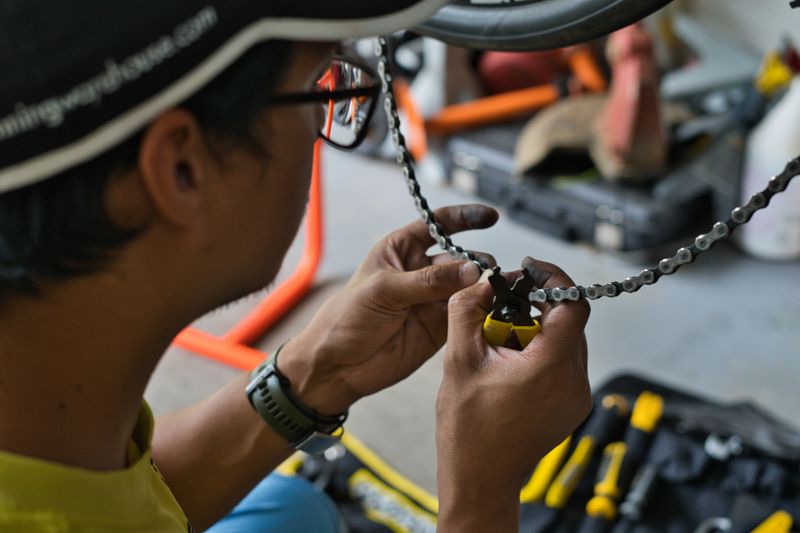
Inner tubes in the right size, with the right valve type and length for your rims, are the obvious first item. A spare derailleur hanger for your specific frame is the one most riders discover the value of after a fall in an unfamiliar town. Brake pads for your specific caliper, gear and brake cables, and a few chain links or a quick link cover most of the rest.
In the saddle, spoke nipples and a couple of spokes of the correct length are useful if your wheels are unusual enough that shops will not stock them. The common thread is that these are cheap, specific to your machine, and impossible to improvise at the roadside.
Why hangers deserve special mention
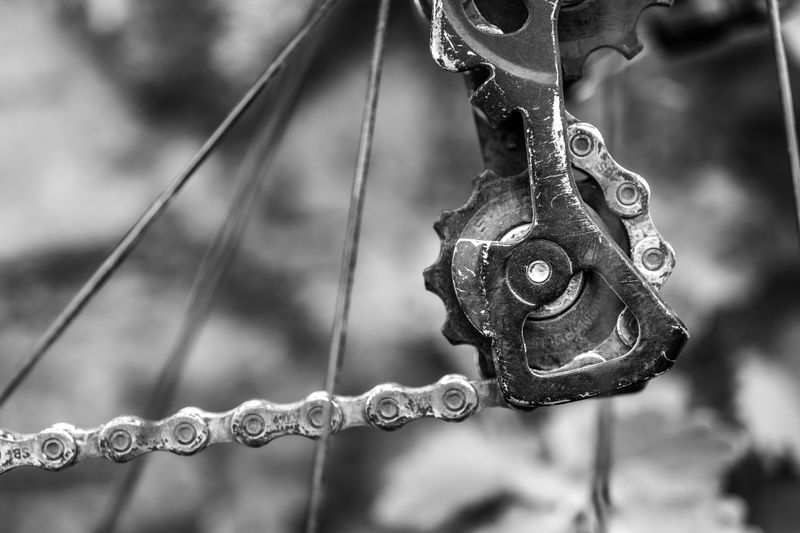
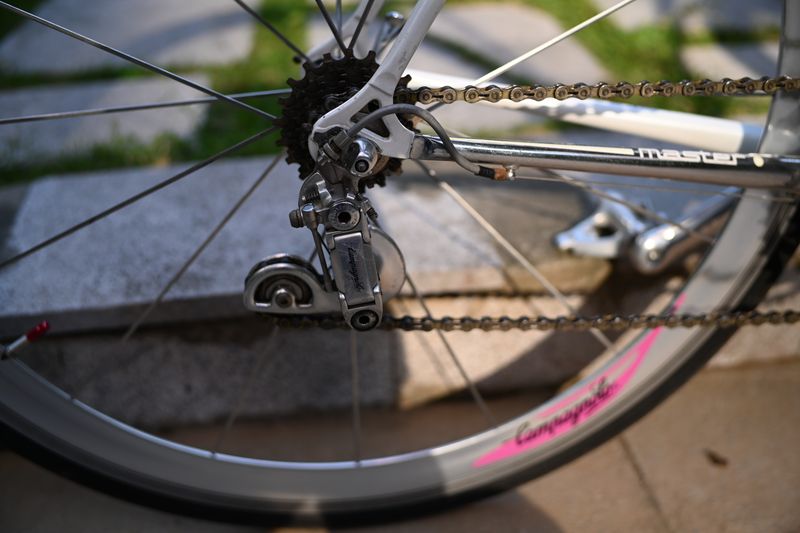
A derailleur hanger is a small piece of soft metal designed to bend or break rather than let the frame be damaged. That means it does its job by failing, which is exactly what happens when the bike falls on its right side. There are a great many hanger patterns, they differ between frames and model years, and shops rarely have yours.
A bent hanger also causes gear problems that look like a maladjusted derailleur, which sends people down the wrong diagnostic path. Two spare hangers bought when you buy the bike is one of the cheapest pieces of insurance in cycling.
Consumables that are not obviously consumable
Cables and their housing wear internally, and the symptom is a lever or shifter that becomes gradually vaguer rather than failing suddenly. Bearings in hubs, headsets and bottom brackets are consumable too, though on a much longer timescale. Rim brake pads wear the rim as well as themselves, and rims are consumable in a way that surprises people.
Tyres deteriorate with age as well as use, and one that has been in a shed for years may be cracked regardless of tread.
Chains are the item that determines the life of everything else in the drivetrain, which is why replacing them early is cheap.
What not to stockpile
Anything with a limited shelf life, such as sealant or some adhesives, is better bought when needed than stored for years. Expensive components bought speculatively usually turn out to be incompatible with the machine you eventually own.
Parts for a bike you no longer have accumulate silently and are the reason most sheds contain a box of unusable spares. Buying spares for a hypothetical upgrade rather than an actual failure is how a modest box becomes a small warehouse. The useful test is whether the part would stop a ride if it failed tomorrow, and whether a shop would have it.
Range and charging figures are quoted under conditions nobody commutes in.
Keeping the box useful
Labelling sizes matters, because inner tubes and cables look interchangeable and are not. Writing the fitted date on a tag when you install something tells you how long things last on your particular route.
Checking the box when you order anything else avoids the pattern where you own three of one thing and none of another. Storing it somewhere dry keeps rubber and steel in usable condition, which a damp garage will not. A box that reflects your actual bike is worth far more than a large box reflecting bicycles in general.
The takeaway
Buy the replacement when you fit the current one and you will never again wait a week for a five-minute job.
Most of riding well is being boring and predictable to everyone else on the road.
Questions readers ask
What is the single most useful spare to own?
A derailleur hanger matched to your frame, because it is designed to break, it varies enormously between frames, and almost no shop will have yours. After that, inner tubes and brake pads.
Do spare parts go off in storage?
Rubber and sealant do, over years. Metal parts, cables and chains keep almost indefinitely if stored dry. Tyres stored somewhere damp or in sunlight can perish even unused.