Maintenance
What a Tune-Up Includes and What It Does Not
A shop tune-up is a defined set of adjustments rather than a general restoration, and the parts it does not cover are where the unexpected bill comes from.
A tune-up is one of the most commonly bought bike services and one of the least clearly defined. Understanding what the term normally covers explains why estimates and final bills diverge.
The core of a tune-up is adjustment
The standard package is labor on things that drift out of alignment: gear indexing, brake adjustment, wheel truing, bearing adjustment, and a general safety check.
These are all restoring a correctly assembled bike to its intended settings without replacing anything.
Because it is labor on existing parts, the price reflects time rather than materials, which is why a flat rate can be quoted in advance.
Consumables are not included by default
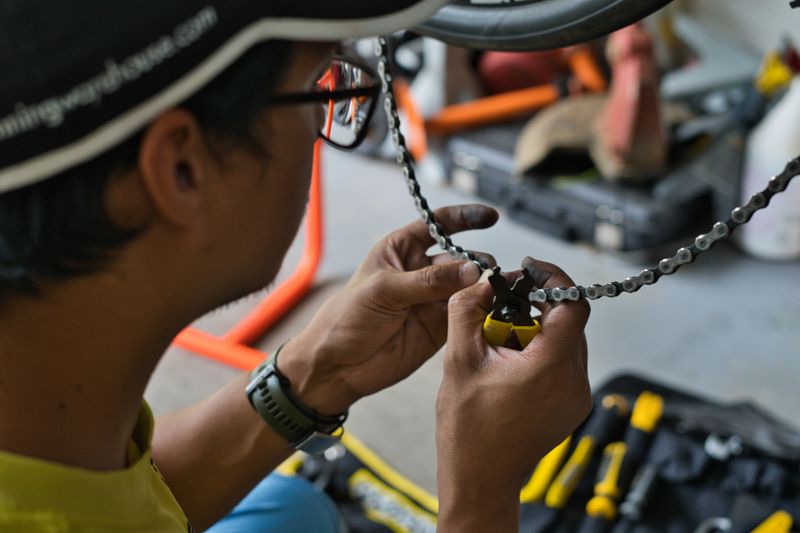
Chains, cassettes, brake pads, cables, housing, tires, and bar tape all wear out and are usually quoted separately as parts.
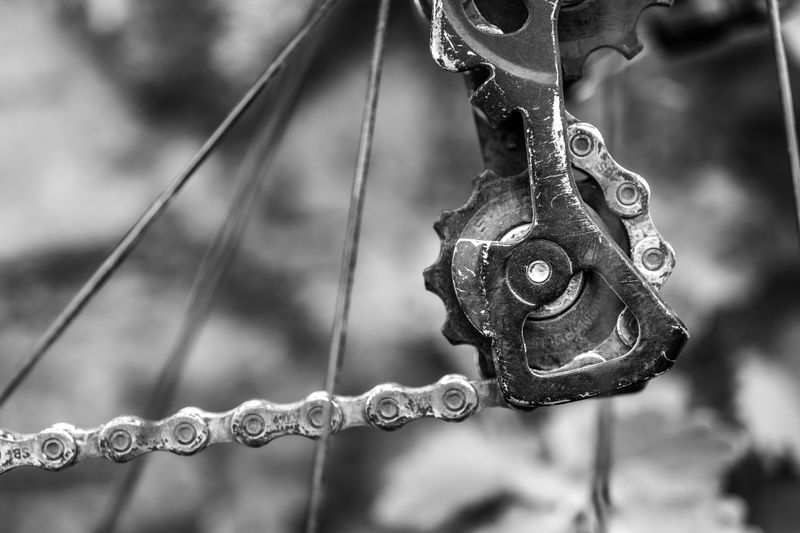
A bike arriving with a worn chain cannot simply be adjusted into shifting well, because the wear is what caused the shifting problem.
This is where a quoted tune-up becomes a larger invoice, and it is the reason shops ask for a spending limit before starting work.
Overhauls are a different category of work
An overhaul means disassembly: removing bearings, cleaning and repacking or replacing them, and stripping the frame of components.
That work takes several times as long as a tune-up and is priced accordingly, which is why it is offered as a separate tier.
Sealed cartridge bearings usually get replaced rather than serviced, so an overhaul on a modern bike is largely parts and removal labor.
Suspension and hydraulics follow their own schedules
Suspension forks and shocks have manufacturer service intervals measured in hours of use, involving seals and oil that a tune-up does not touch.
Hydraulic brakes need bleeding only when the lever feel indicates air in the system or when the fluid is due by the maker's schedule.
Electric bike systems add firmware, battery diagnostics, and motor service that generally require the manufacturer's tools and are quoted separately.
The useful conversation before the work starts
Describing how the bike is used, what it does wrong, and what the budget is produces better outcomes than asking for a tune-up and waiting for a call.
Asking which items are safety-critical, which are performance, and which can wait a season lets a rider stage the spending sensibly.
A bike that has sat unused for years is usually an overhaul rather than a tune-up, and hearing that early is cheaper than discovering it halfway through.
Questions readers ask
My steering feels notchy in the straight-ahead position. What is that?
An indented headset bearing race, usually caused by riding with a loose headset. The notch cannot be polished out, so the bearing needs replacing, and the adjustment needs correcting afterwards.
How long should bearings last?
It depends far more on water and grit than on distance. A bike with mudguards and dry storage can go years; one ridden through salted winters without guards may need attention annually.