The Commute
Errands by Bike Change What You Buy and How Often
A bicycle sets a limit on volume and none on stopping. That combination quietly rearranges a week of shopping into something quite different.
The points below about shopping by bike are ordered by how much difference they make, not by how often they get repeated.
What matters most
- Capacity constrains each trip but stopping costs almost nothing.
- Weight distribution matters more than total weight for handling.
- Fragile and awkward items are the genuine limitation, not heavy ones.
Small loads, many trips
A car encourages one large shopping trip because parking is the expensive part and the boot is effectively unlimited. A bicycle inverts both, since stopping outside a shop costs almost nothing but the amount you can take home is genuinely capped.
Riders who switch usually find themselves shopping more often for less, which fits naturally around a route they were riding anyway. Fresh food arrives fresher, less is wasted, and the weekly planning that a big shop demands largely disappears. The downside is that anything genuinely bulky requires either a delivery or a different vehicle, and pretending otherwise leads to unpleasant rides.
What a bike carries well
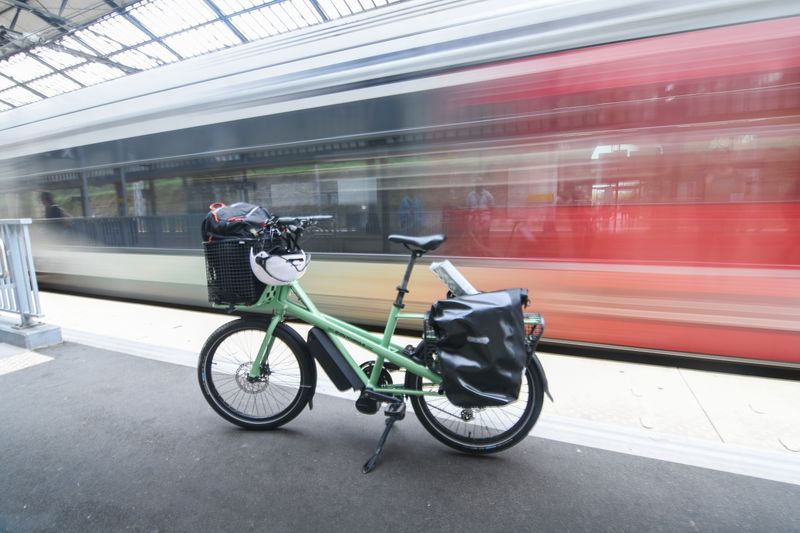
Dense heavy items such as tins, bottles and rice sit low in a pannier and barely affect the handling at all. Bulky light items are the awkward ones, because volume runs out long before the weight limit does. Two panniers of roughly equal weight ride far better than one heavy one, which is worth arranging at the checkout rather than at the bike.
A rack bag or basket handles the last few items and the ones you want to reach without dismounting. Anything that could be crushed should go on top and anything that could leak should go in its own bag, for reasons that need no elaboration.
What it carries badly
Long rigid objects extend beyond the machine and catch on things you did not know were there, particularly when you turn. Tall loads raise the centre of mass and make the bike feel unsettled at exactly the low speeds you use in a car park.
With a loaded rack, anything hung from the handlebars sits high and on the steering, which is the worst combination available. Fragile items suffer from vibration on rough surfaces far more than they would in a car, so they need padding rather than care. A load that overhangs on one side changes how much space you take up, which matters when passing a queue of stationary traffic.
Locking up for two minutes
The most common failure in errand riding is treating a short stop as too short to bother locking properly. Opportunistic theft is fast, and a bicycle leaning unlocked against a shopfront is a genuinely different proposition from a locked one. Panniers can usually be taken off in a second and carried inside, which removes the risk of returning to an empty rack.
Come the wet months, somewhere to leave the bike is often the deciding factor in which shop you use, which is a quiet way infrastructure shapes behaviour. A machine with a frame lock built in makes short stops far more likely to be secured, because the effort is close to zero.
Chaining errands into a route
Because stopping is cheap, several errands become one loop rather than several separate journeys. Ordering the stops so that heavy and fragile items are collected last keeps the bike easy to handle for most of the ride. Cold items collected last also arrive in better condition, which matters more in summer than most people expect.
Riding the loop in the direction that puts the hills before the load makes the whole thing noticeably easier. The route that works is rarely the shortest one, because the bike-friendly streets and the parking availability both pull it around.
Range and charging figures are quoted under conditions nobody commutes in.
Where it stops working
A large delivery, a flat-pack purchase or a month's supplies for a family are not bicycle jobs and there is no shame in that. Wet weather turns cardboard packaging into a problem quickly, so paper bags and rain are a poor combination.
Mid-traffic, very hot weather limits how long chilled items can be in a pannier, which shortens the loop you can plan. Riding heavily loaded in dense traffic asks more of your braking and your handling than an empty bike does, so leave more room. Mixing the two approaches, with a bike for the frequent small trips and something else for the rare big one, is what most people settle on.
Everything above, in order of what to do first
- Small loads, many trips. A car encourages one large shopping trip because parking is the expensive part and the boot is effectively unlimited.
- What a bike carries well. Dense heavy items such as tins, bottles and rice sit low in a pannier and barely affect the handling at all.
- What it carries badly. Long rigid objects extend beyond the machine and catch on things you did not know were there, particularly when you turn.
- Locking up for two minutes. The most common failure in errand riding is treating a short stop as too short to bother locking properly.
- Chaining errands into a route. Because stopping is cheap, several errands become one loop rather than several separate journeys.
- Where it stops working. A large delivery, a flat-pack purchase or a month's supplies for a family are not bicycle jobs and there is no shame in that.
The takeaway
The bicycle does not carry less shopping, it just carries it more often and in a better order.
Fix the small rattle. Every large repair began as one.
Questions readers ask
How much can a normal bike carry?
More than most people assume, and the limit is usually volume rather than weight. Check what your rack is rated for, keep the weight low and even, and remember that stopping distance grows with the load.
Is a basket or a pannier better for shopping?
Panniers, for anything substantial, because they sit low and beside the wheel rather than high on the steering. A basket is convenient for small items you want to reach quickly.